Stepping into the boots of scoundrel Kay Vess in Star Wars Outlaws feels less like playing a video game and more like inhabiting a long-lost chapter of the original trilogy. Released in 2024, Massive Entertainment’s open-world epic quickly proved that an authentic Star Wars experience depends on far more than lightsabers and Force powers. Even two years later, the game stands as a masterclass in how to translate a beloved film franchise into an interactive medium, leaning on meticulous world-building, evocative audio, and a filmic presentation that makes every moment feel ripped straight from the silver screen.
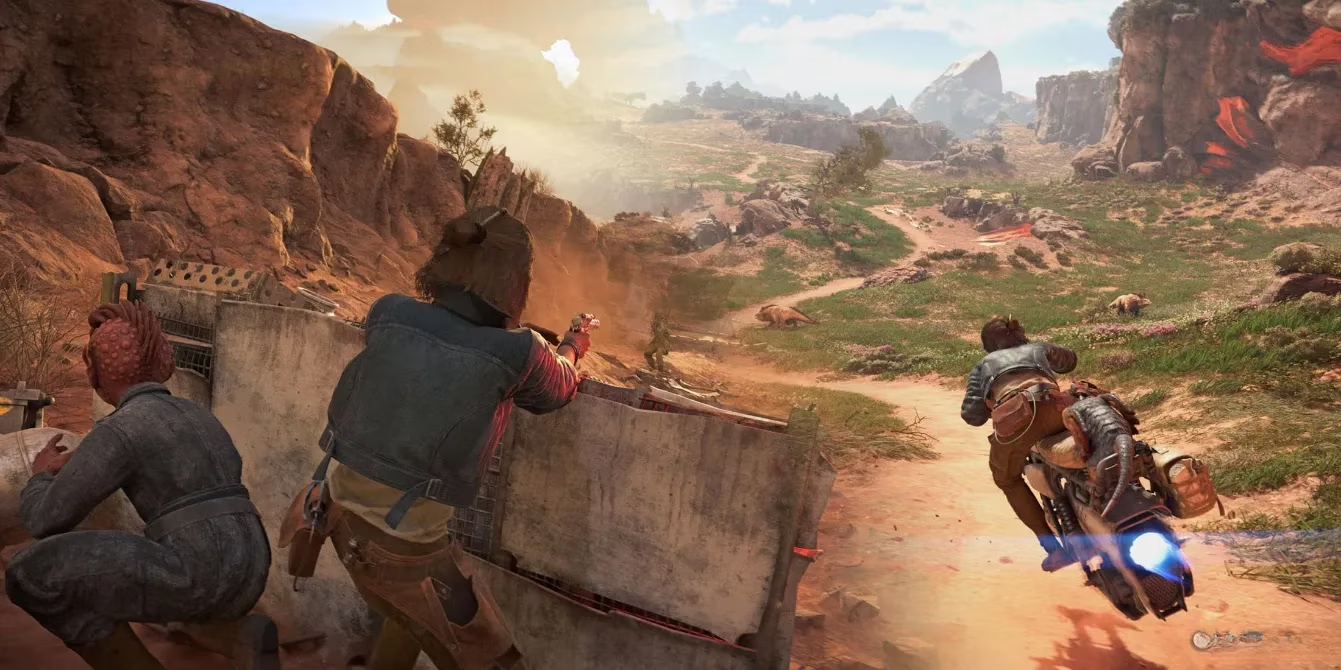
Central to this achievement is the living, breathing world that reacts to both the player and itself. The dusty thoroughfares of Mos Eisley, the neon-drenched alleys of Canto Bight, and the windswept plains of Toshara are never static dioramas. Non-player characters bustle about with purpose, haggling with Jawas, repairing vaporators, or simply gossiping about the latest Imperial crackdown. Speeders zip past in a constant stream, their engines whining with that unmistakable Star Wars pitch, forcing players to look both ways like a true galactic citizen. The ambient dialogue system is particularly remarkable; eavesdropping on a pair of stormtroopers debating the merits of the new T-15 repeating blaster or listening to a cantina patron grumble about a sabacc loss pulls players deeper into the fabric of everyday life. As Kay’s reputation rises, civilians begin to recognize her, whispering her name or reacting with fear if she has sided with a rival syndicate. This dynamic system ensures that no two visits to a location feel identical, shattering the illusion of a scripted theme park and replacing it with a credible, persistent society.
Beyond the visual spectacle, the soundscape of Star Wars Outlaws does immense heavy lifting in delivering authenticity. The franchise’s auditory identity is one of the most recognizable in cinema history, from the guttural roar of a TIE fighter to the seismic hum of a lightsaber igniting. Massive Entertainment wisely leaned into this legacy, blending Ben Burtt’s iconic sound effects with an original score by composer Wilbert Roget II that channels John Williams’s orchestral grandeur without ever slipping into parody. Every blaster bolt sizzles with the same electrical crackle heard in the films, and the low, mechanical breathing of a nearby Imperial probe droid instantly heightens tension. The score swells during speeder chases and falls to a tense whisper during stealth sections, responding dynamically to the player’s actions just as a film soundtrack would. Even the environmental audio is carefully layered: the distant bark of a wampa on Hoth, the chatter of droids in a Jawa sandcrawler, and the eerie silence of a derelict cruiser all work together to make the galaxy feel tangibly present.
Perhaps the boldest choice that cements the game’s filmic authenticity is the 21:9 Cinematic Mode, enabled by default when the game launched. While some players initially debated its utility, the ultra-widescreen presentation adds a permanent letterbox that mimics the theatrical aspect ratio of the original Star Wars movies. Combined with the carefully crafted camera angles during cutscenes and the naturalistic lighting that bathes Tatooine’s twin sunsets in warm oranges and deep purples, the mode blurs the line between gameplay and a lost Lucasfilm production. It encourages players to frame their own adventures as cinematic moments—whether that means a dramatic standoff in a dusty canyon or a quiet moment aboard the Trailblazer as hyperspace streaks past the cockpit.
Two years on, Star Wars Outlaws continues to set a benchmark for how licensed properties should be handled in interactive entertainment. It understands that genuine Star Wars immersion comes not from cramming in every Jedi cameo, but from sweating the small details: the texture of a worn-out flight jacket, the hum of a landspeeder, the way dust kicks up during a shootout, and the idle chatter of a galaxy that exists whether or not the player is there to witness it. By treating its source material with reverence rather than mere obligation, Massive Entertainment didn’t just create a fun open-world game—it built a living monument to the galaxy far, far away, and its influence on future Star Wars titles will likely be felt for years to come.