I'll be honest, when rumors first swirled that the Nintendo Switch 2 port of Star Wars Outlaws would ship as a Game-Key Card, I joined the chorus of groans echoing across Reddit and social media. Like many physical collectors, I want my cartridge to hold the entire game—not just a glorified download token. But after digging into the explanation from someone who actually worked on the port, my frustration has shifted into understanding. The real reason isn't about companies cheaping out on cartridge manufacturing. It's about raw, technical speed you simply can't fake.
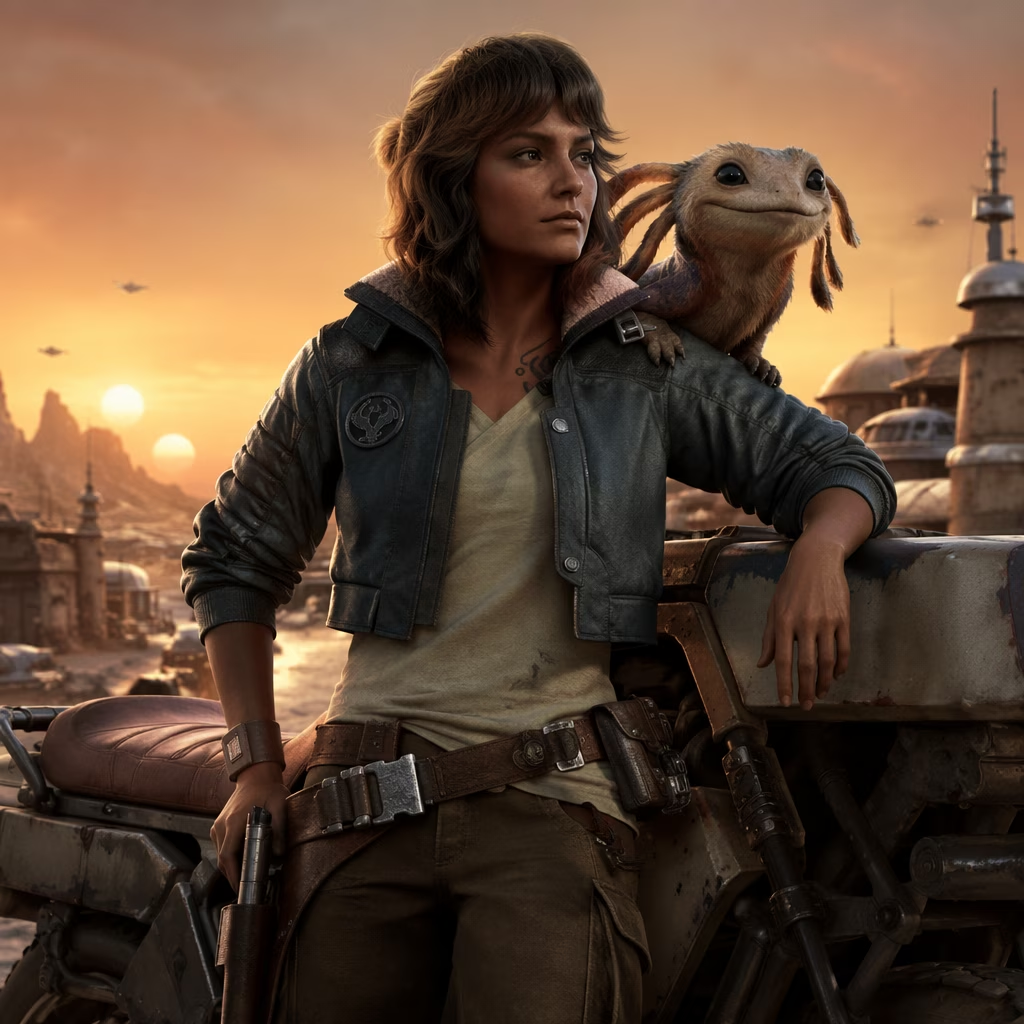
The conversation kicked off when Ubisoft audio architect Rob Bantin, who was part of the team bringing the open-world scoundrel sim to Switch 2, took to social media to set the record straight. He explained that the choice had nothing to do with saving a few bucks on a larger capacity cart. The culprit? The Nintendo Switch 2's bespoke game cards simply couldn't deliver the data throughput required by the Snowdrop engine.
"Snowdrop relies heavily on disk streaming for its open world environments, and we found the Switch 2 cards simply didn't give the performance we needed at the quality target we were going for," Bantin wrote. Reading that immediately clicked for me. Star Wars Outlaws wasn't built from scratch for Nintendo's hardware. It's a game designed for the lightning-fast SSDs inside the PlayStation 5 and Xbox Series X|S. Those machines can zip data from storage into memory so quickly that the game engine expects near-instant access to massive chunks of world geometry, textures, and audio. When the team ported Outlaws to Switch 2, they hit a hard wall: the read speeds from the physical game card couldn't keep up with the engine's demands.
Here's the thing most players don't think about. We assume all storage is more or less the same when it comes to playing games, but that's far from true. The internal storage on the Switch 2, like the internal SSD on those other consoles, is significantly faster than any removable cartridge. So, by shipping a Game-Key Card that tells the console to download the full game to internal memory, Ubisoft ensured every player gets the experience as designed. If they had tried to cram everything onto the card, you'd be suffering constant pop-in, stuttering during speeder bike chases, and loading screens smashing the immersion every few steps in Mos Eisley.
I also found Bantin's candor about the decision-making refreshing. He noted, "I don't recall the cost of the cards ever entering the discussion – probably because it was moot." That's a crucial point. Yes, larger-capacity Switch 2 cards cost more for publishers, and that sometimes pushes companies toward the Game-Key Card route. But here, performance was the bottleneck, not money. I can respect that. As a player, I'd rather download 50 gigabytes once than never be able to flee from Imperial forces without the world falling apart.
But wait, why didn't they just optimize the game enough to run from the cartridge? That's the million-dollar question, and Bantin addressed it head-on. "I think if we'd designed a game for Switch 2 from the ground up it might have been different," he said. "As it was, we'd build a game around the SSDs of the initial target platforms, and then the Switch 2 came along a while later." This is the reality of porting. It's incredibly hard to fundamentally alter how a game engine streams data post-launch, especially one as complex as Snowdrop. Starting over for one version was never going to happen.
This whole situation has sparked a wider conversation that Nintendo itself seems to be tracking. Last month, the Big N sent out a survey probing Switch 2 owners about their preferences for digital versus physical games, and specifically asking for feedback on Game-Key Cards. The initial reception among fans hasn't been great, and I get why. When I hold a box, I want the full game inside—owning it, truly. But hearing Bantin's explanation has me rethinking the outrage.
The math of modern gaming is changing fast. Game sizes are ballooning. Cyberpunk 2077's Phantom Liberty expansion alone would strain a single Switch 2 card. For a sprawling open-world title like Star Wars Outlaws, which first released to mixed reviews and underperformed sales—Ubisoft boss Yves Guillemot later blamed the "choppy waters" of the Star Wars fandom itself—the Switch 2 version had to arrive later, and it had to make tough choices. Getting it into players' hands with a smooth experience meant prioritizing download-based play.
I won't pretend Game-Key Cards are a perfect solution. They hurt the secondhand market, they demand online connectivity at least once, and they feel less tangible. But I'd also rather have the option to play Outlaws on my Switch 2 with all its dusty planets intact, rather than have no port at all because no shrink wrap could contain the required bandwidth. If you're angry, be angry at the physics of NAND flash, not the publisher. Or better yet, join me in hoping the inevitable Switch 2 Pro revs up cartridge speeds to the point where this debate becomes ancient history.
Until then, here are some key takeaways I've gathered from this saga:
-
🎮 Game-Key Card was performance-driven, not cost-driven. Ubisoft's team never debated higher-capacity card pricing; streaming speed killed the option.
-
🚀 Snowdrop's open world demands SSD-level speeds. PS5 and Xbox Series X built the engine to leverage internal storage, and Switch 2's card interface couldn't match it.
-
📥 The full game downloads to internal memory. That means you get consistent performance, even if it stings buying a physical case with no full game inside.
-
🧩 Nintendo is listening. Their recent survey suggests they want to gauge how fans feel about these cards and could influence future policies.
-
⏳ Ground-up Switch 2 titles may avoid this. Bantin confirmed a game designed natively could potentially run from the card; ports will always struggle harder.
In the end, I'm choosing to see the Game-Key Card as a necessary evil for a console trying to straddle the gap between a handheld and the world of modern AAA epics. It's not the ideal I dreamed of when I unboxed my Switch 2, but it's the price of having Kay Vess's adventure in the palm of my hands without performance crumbling every time I whip out Nix. And honestly, after hearing from the developers directly, I'm a lot less salty about it.