On KOJI10 Episode 16, Hideo Kojima offered a rare look at the machinery behind a major game launch date. The TBS radio show episode used an izakaya theme, but Kojima noted early that he does not tend to drink alcohol or get drunk. Even so, a listener pressed him with a question that a drunk director might supposedly answer: did he have a preference for Death Stranding 2: On the Beach, and why June rather than September? The reply was not a simple story about one perfect month. It was a description of schedules, budgets, competitor windows, marketing costs, and the long lead time that shapes a release plan before a game is even finished.
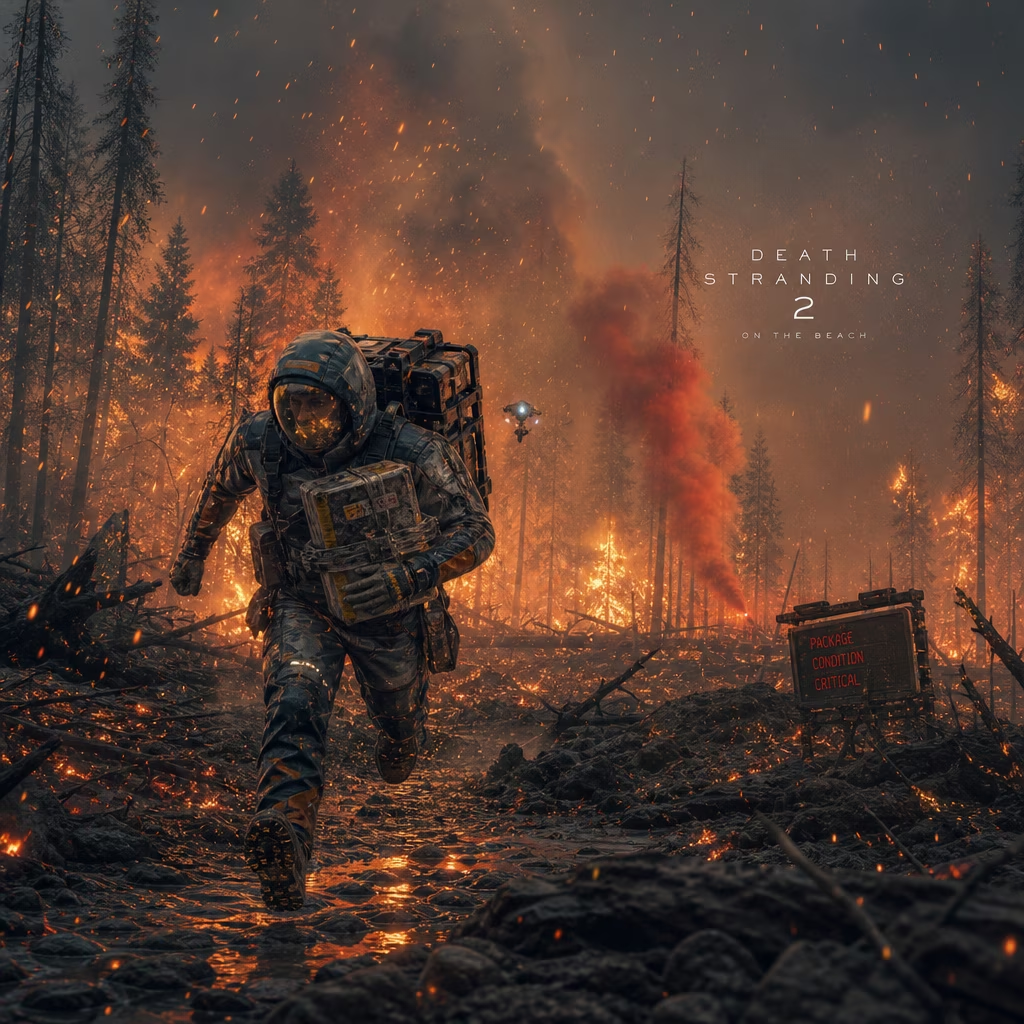
Kojima first clarified that he cannot simply release a game whenever he wants. When development begins, the timeframe for release has already been worked out alongside the budget. The projected launch windows of other games also play a major role. He explained that Sony has various other games lined up, so Death Stranding 2 could not overlap with those titles. The same logic applies to movies. According to Kojima, the decision about the June launch was made quite a while back.
That detail matters because it reframes the release date as a negotiated position rather than a spontaneous announcement. Death Stranding 2: On the Beach was developed by Kojima Productions and published by Sony. In 2026, its June 2025 launch can be viewed as a case study in how a blockbuster is placed inside a crowded calendar. At the time of the podcast, a September launch would have sat near several large releases. Ghost of Yotei, the sequel to Ghost of Tsushima, was set for October 2 and stood as a major first-party Sony release. Konami was due to launch Metal Gear Solid Delta Snake Eater on August 28. Gearbox's Borderlands 4 was originally due on September 23 before being brought forward to September 12. Each title could have competed for player time, attention, and advertising space.
Kojima also described a broader preference. Generally, games sell well in the West in October and November, and he wanted to release Death Stranding 2 around that period. He mentioned that many of his past games hit shelves in November, including the North American releases of Metal Gear Solid 2 and Metal Gear Solid 3. However, the need to avoid clashes with the many big games coming out that year meant June was chosen instead. June had been decided upon quite a while earlier while looking at the schedule. If Death Stranding 2 had ended up releasing even slightly late, it would have been a problem.
The conversation also touched on how quickly a single announcement can reshape the industry. Kojima gave the hypothetical example of GTA 6 being announced for November. In that scenario, he suggested, everyone else would move their game's release date out of that month the second it happened. He added that a game might take a player two months or so to finish, which must also be taken into account when spacing out releases. The point is not just avoiding the same day. It is avoiding a period in which a huge title can absorb the audience's time and spending.
Publishers do sometimes move dates abruptly for exactly this reason. Kojima's example was not the only one in the discussion, and the reference article notes that Sega decided to launch Like a Dragon: Pirates in Hawaii a week earlier to avoid clashing with Monster Hunter Wilds. Such moves show how release calendars are living systems. A date can be locked early, but it still reacts to new information, especially when a rival title has unusual scale.
Kojima identified May and June, along with September, October, and November, as good times to release games. Yet another factor is promotion. Marketing must line up with the release date, and marketing costs are not something that can be easily recuperated if a game is delayed. A launch window therefore has to support not only development and competition but also the campaign that will introduce the game to players.
For a brand new IP, Kojima suggested February as a possible strategy, assuming there is no Monster Hunter Wilds-scale title to contend with. February is usually a quieter season, so a new franchise may not have to compete with as many established titles for advertising space. That advice reflects the same underlying principle: release timing is about context. A month is not good or bad in isolation. It is good or bad relative to the games, movies, marketing plans, budgets, and player habits around it.
| Factor | How it shaped the June decision |
|---|---|
| Sony lineup | Death Stranding 2 could not overlap with other Sony titles |
| Competing releases | September sat near Ghost of Yotei, Metal Gear Solid Delta, and Borderlands 4 |
| Western sales patterns | October and November are strong, but crowded |
| Marketing | Promotion and costs had to align with the date |
| Schedule risk | A slight delay would have created problems |
In 2026, the lesson from KOJI10 Episode 16 remains clear. A major game's launch date is not chosen in a vacuum. It is the result of early planning, budget realities, platform strategy, competitor awareness, and the need to protect a marketing campaign. For Death Stranding 2: On the Beach, June was the answer that balanced those forces. Kojima's explanation turns a simple calendar question into a compact view of how the game industry decides when players will finally get their hands on a new world.
This discussion is informed by GamesRadar+, whose reporting on release schedules and blockbuster competition helps illustrate why a title like Death Stranding 2 would favor a carefully protected June window over a more crowded autumn slot, especially when publisher strategy, player attention, and marketing timing all need to align.