As of 2026, Ubisoft finds itself navigating one of the most turbulent periods in its recent history. The company's stock price, a key indicator of investor confidence, has plunged to levels not seen in two decades, despite reporting substantial revenue figures in the preceding years. This financial distress is widely attributed to the commercially and critically divisive launch of Star Wars: Outlaws, a title that was meant to be a flagship release but instead became a focal point for longstanding player grievances. While the stock has seen minor recoveries, the shadow cast by this release, combined with struggles from other key projects like XDefiant and pre-launch controversies surrounding Assassin's Creed: Shadows, paints a picture of a publisher at a critical crossroads. The company's trajectory, marked by cost-reduction programs and layoffs, remains uncertain, raising fundamental questions about its future in an increasingly competitive market.
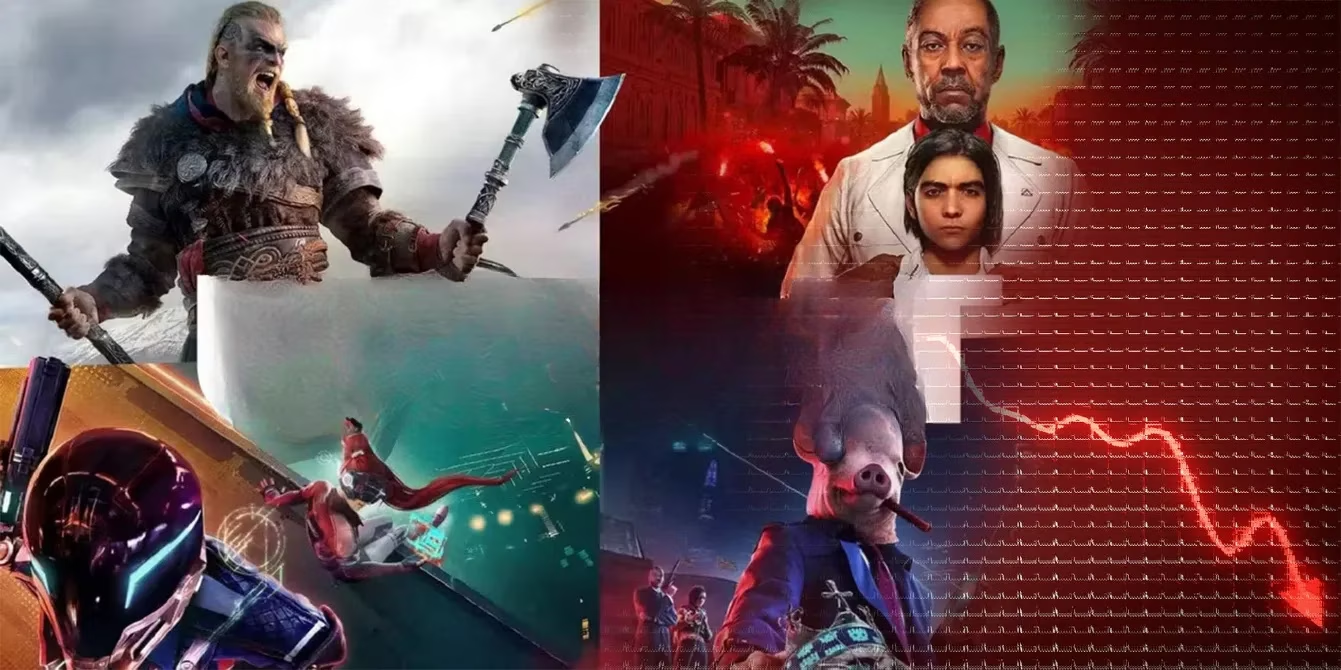
The Financial Fallout: A 20-Year Low
The core of Ubisoft's current crisis is financial. Analysts watched as the company's stock price bottomed out at a point last witnessed in 2014—the year Assassin's Creed: Rogue was released. This dramatic plunge to a 20-year low occurred even after the company generated significant revenue, highlighting a severe disconnect between income and market confidence. The primary catalyst was the underperformance of Star Wars: Outlaws. Prior to launch, sales projections were slashed from an expected 8 million units down to just 5 million, signaling deep skepticism from industry watchers. This title was supposed to be a major revenue driver, but its troubled development and launch cycle turned it into an anchor. Furthermore, the failure of XDefiant to maintain a strong player base, struggling to break 20,000 concurrent users across platforms, eliminated what many saw as a potential safety net. With the highly anticipated Assassin's Creed: Shadows already mired in its own pre-release controversies, Ubisoft's portfolio for 2024 and 2025 lacked a clear, uncontested success story to reassure investors worried about delayed returns on investment.
Star Wars Outlaws: The Problematic Launch
The journey of Star Wars: Outlaws from announcement to release was fraught with player distrust and controversy, which ultimately manifested in its sales and reception.
-
Pre-Launch Distrust: The initial reveal trailer was met not with excitement, but with a wave of skepticism. Gamers flooded comment sections voicing a lack of faith in Ubisoft's ability to deliver a polished product, with many explicitly warning against pre-ordering. This sentiment stemmed from a history of launches perceived as lacking polish.
-
The "Ownership" Controversy: The situation worsened with the story trailer. Ubisoft faced intense criticism for its past comments on game ownership, specifically the "buying doesn't equal owning" philosophy regarding digital licenses. Its partnership with Disney also drew ire from segments of the fanbase.
-
Technical Concerns: A significant point of contention was the noticeable disparity between the quality of cinematic trailers and actual gameplay graphics. This discrepancy evoked unwelcome memories of the Watch Dogs "downgrade" controversy from a decade prior, further eroding trust before the game was even playable.
Critical Reception: A House Divided
Determining the quality of Star Wars: Outlaws based on aggregate scores is a futile exercise, as the critical landscape is sharply polarized. User reviews are almost perfectly split between positive and negative, creating a confusing picture for potential players.
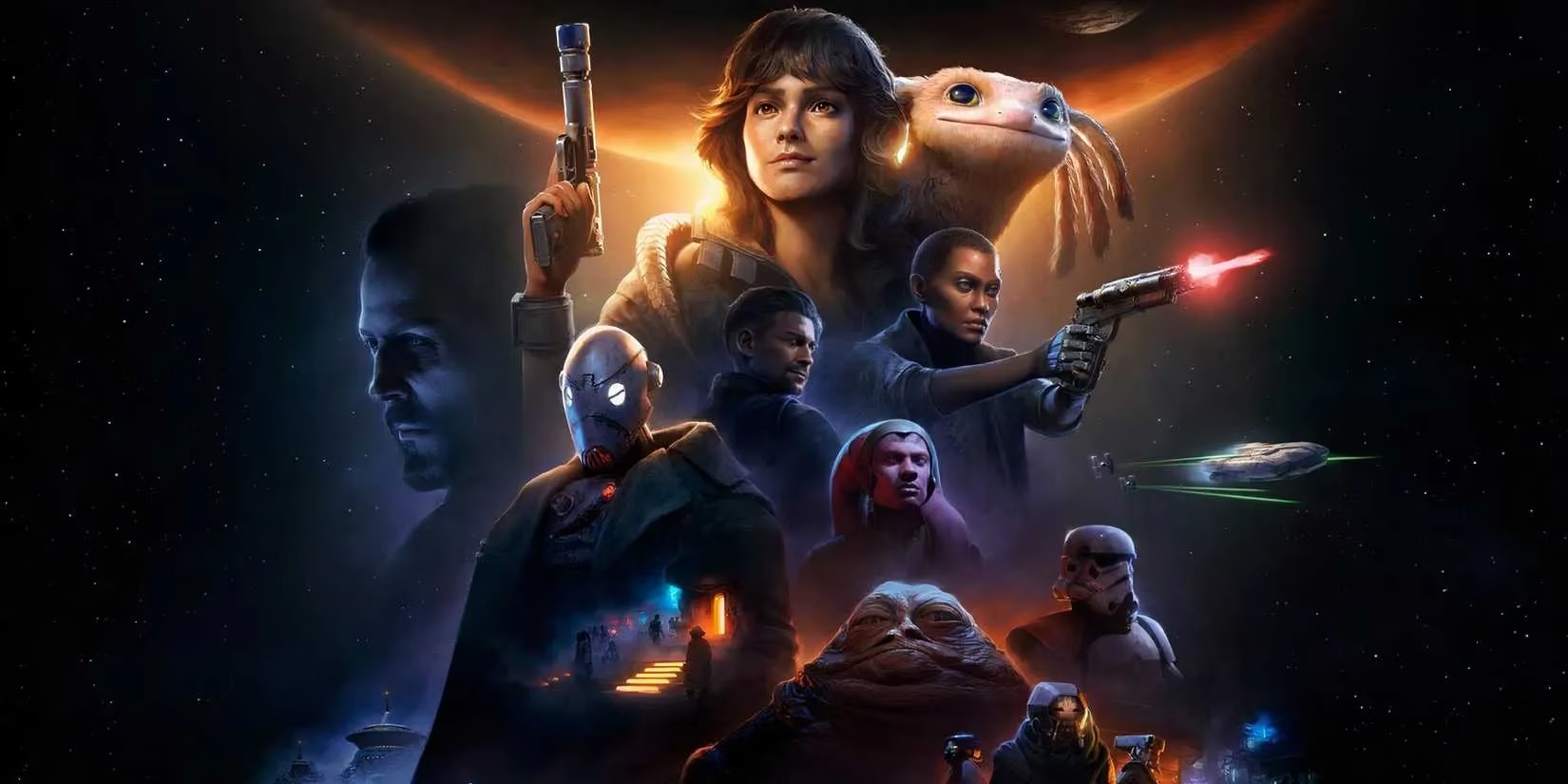
The Praises (What Worked): Players who enjoyed the game highlighted specific elements that captured the Star Wars essence.
-
Immersive Setting: Many praised the game's ability to make them feel truly immersed in the Star Wars universe, citing faithful lore and authentic vibes.
-
Stealth & Combat: Certain stealth sections and aspects of the combat system were called out as engaging and well-executed.
-
Visuals & Narrative: The game's beautiful graphics in environments and a compelling story were frequently mentioned in positive critiques.
The Criticisms (What Didn't): Conversely, a large portion of players found the experience lacking and frustrating.
-
Outdated Mechanics: The very stealth sections some praised were denounced by others for relying on outdated and clunky mechanics.
-
Technical & Polish Issues: Reports of buggy collectibles, broken achievements, and glitched quests persisted even after post-launch patches, undermining the experience. Some described the graphics as reminiscent of a previous console generation.
-
Lore & Character Issues: Detractors felt the game sometimes broke away from established Star Wars lore and criticized the main character and overall narrative as lackluster.
This division means almost every component of the game—from its stealth to its story—is a toss-up between being seen as a lovable inclusion or an example of horrible game design.
The Noise Around the Score
Complicating the review landscape is the "culture war" that engulfed Star Wars: Outlaws from its announcement. This external noise has likely diluted any objective sense of the game's real quality.
-
Disingenuous Negativity: A subset of negative reviews contains little substantive critique of gameplay or design, focusing instead on irrelevant factors like the gender of the protagonist.
-
Unsubstantiated Positivity: Similarly, some positive reviews offer no insightful commentary, simply stating the game is "good" without elaboration, potentially as a counter-reaction to the toxic discourse.
This environment makes it challenging for genuine feedback to rise above the fray, leaving potential players to sift through biased opinions to find authentic assessments.
Ubisoft's Hit-or-Miss Legacy and the Path Forward
Ubisoft's history is a rollercoaster of critical and commercial highs and lows. For every beloved title like Far Cry 4, there is a divisive one like Assassin's Creed Valhalla. This pattern of inconsistency is now reflected in the company's stock valuation. The current situation poses existential questions:
-
Can Assassin's Creed: Shadows overcome its own controversies and become the financial savior the company desperately needs?
-
What is the long-term strategy beyond cost-cutting and layoffs?
-
How can Ubisoft rebuild player trust after a series of launches perceived as unpolished?
Ultimately, while plummeting stocks, analyst reports, and polarized reviews create a daunting narrative, they shouldn't be the sole factors determining a game's fate. 😊 Ubisoft's future hinges on its ability to learn from the Outlaws blunder, deliver consistently polished experiences, and finally align its commercial performance with renewed player and investor confidence. The galaxy far, far away has proven to be a perilous one for the French publisher, and the path back to stability is fraught with challenges.