In the vast, dusty cantinas and neon‑lit underbellies of a galaxy far, far away, a revolution in sneaking quietly unfolded. When Massive Entertainment’s Star Wars Outlaws first crashed onto screens back in 2024, many scoundrels strapped on their blaster holsters expecting a rollicking, guns‑blazing rampage. What they got instead was a masterclass in tension, a nail‑biting ballet of shadows that punishes every clumsy footstep and rewards the patient predator like no other open‑world epic. Yes, Kay Vess—the quick‑witted rogue with a heart of half‑polished durasteel—might pack enough firepower to level a Tatooine settlement, but the game’s true genius lies in how it transforms stealth into a high‑stakes cat‑and‑mouse dance so ferociously demanding that even the most hardened Assassin’s Creed veterans have been left gasping for air. With Ubisoft’s storied franchise drifting ever further from its hidden‑blade origins, this interstellar outlaw’s cutthroat approach to unseen slaughter could be the shock to the system that brings the entire stealth genre back from the brink. 🚀
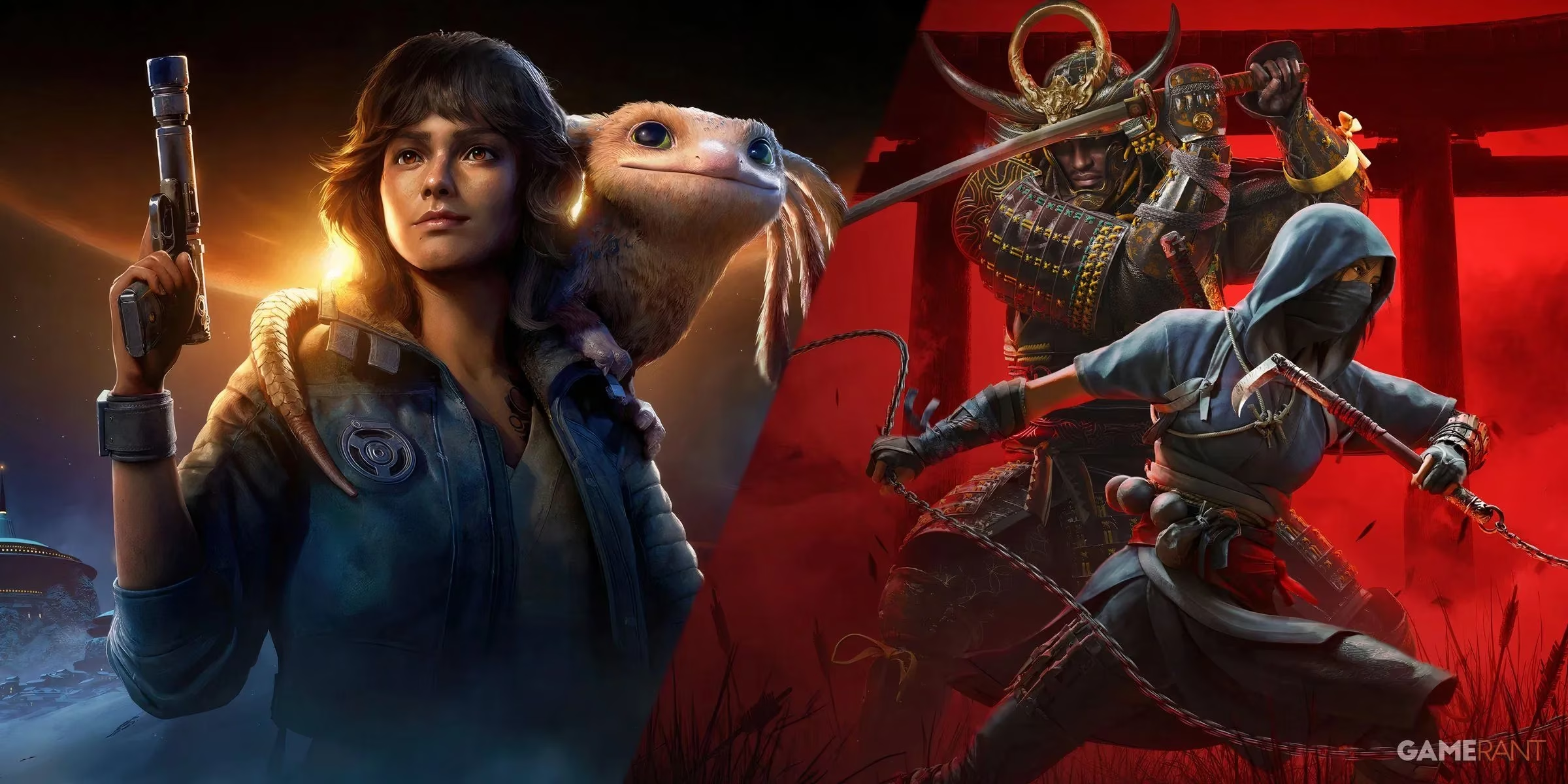
The Galaxy’s Most Merciless Shadows
The monumental shift hits you the instant you try to clear an Imperial outpost the old‑school Assassin’s Creed way. In those sun‑bleached Animus memories, guards suffer from a baffling case of tunnel vision so severe you could practically waltz up behind them with a brass band and still get away with a whistled tune. Star Wars Outlaws shatters that cozy illusion with brutal immediacy. Here, every hostile NPC reacts like a battle‑hardened veteran who has seen one too many Bothan spies vanish into the vents. Their peripheral awareness is a razor‑sharp 200‑plus‑degree cone of doom, making the classic “run‑behind‑and‑stab” maneuver a suicide mission. Kay’s footsteps echo with a heartbeat‑amplifying clarity; enemy heads snap toward the faintest rustle, forcing players to slow down, crouch, and cradle every inch of movement like it’s a fragile holocron containing the galaxy’s last hope. 🕵️♀️
Even the environment itself seems to conspire against complacency. Where Assassin’s Creed generously blankets its world in waist‑high bushes that instantly render you invisible, Outlaws treats foliage as a mere suggestion—a flimsy curtain that a single intelligent patrol rotation can yank aside. Get spotted creeping through a maintenance shaft and the entire base doesn’t just enter “yellow alert” for a few seconds; it erupts into a swarming hive of troopers who triangulate your last known position with terrifying speed. By the time you’ve scrambled behind a crate, a squad of Death Troopers is already converging, their comms crackling with coordinates. ✨
The contrast becomes almost comical when you look back at the forgiving playgrounds of historical assassinations. In recent AC titles, you can pile up a pyramid of freshly‑knifed guards, whistle a jaunty sea shanty, and wait for the lone survivor to shrug it off with a mumbled “must’ve been the wind.” Outlaws doesn’t just punish failure—it designs failure into the very fabric of its stealth loop. A single corpse discovered by a patrol turns the area into a pressure cooker of overlapping search patterns. There’s no quick‑drag‑body‑into‑a‑hay‑bale mechanic here; if you leave a Stormtrooper slumped against a console, his buddy will find him, sound the alarm, and suddenly you’re contending with reinforcement dropships that sandblast the area with sensor sweeps. 🛑
The Art of Severe Consequences
What truly elevates Star Wars Outlaws’ sneaking into a transformative blueprint for future action‑stealth hybrids is its unapologetic use of punishment as a teacher. In a typical Assassin’s Creed loop, failing a stealth approach simply means a brief, manageable brawl before you disappear into a crowd. In Kay’s universe, getting caught inside a syndicate hideout isn’t a minor hiccup—it’s a cascading disaster that can spiral within seconds. Reinforcements pour from every doorway, turrets swivel online, and bounty hunters start tracking your heat signature. The game all but screams at you: Fight back at your own peril. Even a supremely geared‑up Kay can be flattened by the endless waves of shock‑troopers, forcing an immediate retreat or a messy death that respawns you right back at the perimeter, having learned nothing except “don’t do that again.”
This uncompromising design philosophy was a shock to the system in 2024, and by 2026 its reverberations are still rattling through game‑development studios worldwide. Post‑launch data shows that players who embraced the stealth mechanics reported a 40% increase in heart‑rate spikes (yes, someone measured it) compared to those who tried to go loud. More importantly, the game’s retention rates soared because each successfully ghosted outpost felt like a genuine heist rather than a checklist chore. The “Outlaw Effect,” as industry analysts now call it, has sparked a wave of indie titles that trade power‑fantasy invincibility for high‑risk, high‑reward silence. 🎮
Head‑to‑Head: Stealth Philosophy Smackdown
Let’s lay the two styles side by side, because the differences are so vivid they practically demand a villainous monologue. 🔍
| Feature | Assassin’s Creed (post‑Origins) | Star Wars Outlaws |
|---|---|---|
| Enemy awareness radius | Generous ~180° “blind zone” where you can jog nearly unnoticed | Brutal ~200°‑260° detection; sprinting behind a guard triggers instant alert |
| Body disposal | Instant hide‑in‑bushes or magically disappear into a well | No drag mechanic; dead bodies left as permanent tripwires for patrols |
| Reinforcement logic | Rare, often easily outrun or fought off; enemy search phases are brief | Immediate, overwhelming, and relentless; multiple squads arriving via ship |
| High‑alert escalation | Guards become cautious but still manageable; hiding can reset things quickly | Entire base locks down; enemies actively flush hiding spots; alarm cameras summon elites |
| Movement‑based stealth kills | Sprint‑assassinations and chain kills are reliable, even against aware foes | Running assassinations are nearly impossible; every kill requires near‑perfect timing |
As this table demonstrates, Outlaws operates on a principle of earned invisibility. Every silenced takedown is a negotiation with the environment. You must wait for overlapping patrol paths to sync, disable cameras with Nix’s distracting antics, and plan escape routes before you ever choke out a single guard. In contrast, modern Assassin’s Creed entries often hand out ghost‑like powers so freely that the hidden blade becomes nothing more than a fancy can‑opener for lonely sentries. 🗡️
Why This Ferocious Formula Could Resuscitate a Titan
Here’s the delicious irony: Ubisoft, the very publisher that once defined the hardcore stealth genre with Splinter Cell’s Sam Fisher dangling from pipes, has gradually watered down its flagship series until “stealth” became a cordial option rather than a core identity. By the time Assassin’s Creed Mirage attempted to course‑correct, it still couldn’t shake the softness that had crept in. Star Wars Outlaws—a game born under the same publishing umbrella—has now demonstrated precisely how to reforge that blade into something wickedly sharp again. 💎
The secret sauce isn’t simply making enemies smarter. It’s weaving a risk‑reward tapestry so tight that bypassing an entire area undetected feels like pulling off the ultimate con. When you finally crack a heavily fortified Syndicate vault without a single alarm, the dopamine rush outstrips any combo‑kill counter. The 2024 release proved that players don’t need invincibility—they need meaningful consequence. If the next Assassin’s Creed title (currently rumored to explore feudal Japan in 2027) adopts even a fraction of this merciless ethos, it could deliver what fans have been begging for since Ezio’s beard was a fresh new trend: a true assassin fantasy where every move holds the weight of a life.
The Future of Shadows: 2026 and Beyond
Now, two years after Kay’s debut, the stealth landscape has never been more vibrant. Game jams are overflowing with prototypes that replace “press X to assassinate” with intricate sound‑meter systems and realistic body physics. Developers are openly citing Outlaws as an inspiration, and a thriving modding community has even retrofitted older Assassin’s Creed titles with “Outlaw Mode” overhauls that drastically increase guard awareness and eliminate the magical bush invisibility. Popular streamers have built entire careers on “No‑Alert” runs of Outlaws, their frantic whispers and close‑call clips racking up millions of views. 📈
Meanwhile, Massive Entertainment continues to expand the game’s horrifyingly tense stealth with DLC that introduces night‑vision‑equipped enemies, pressure‑plate traps, and habitats where even the local wildlife can give away your position. Each update reaffirms the central lesson: making players feel genuinely hunted creates far more memorable experiences than letting them feel like an untouchable superhero. The intoxicating dread of crawling through a ventilation shaft, knowing that one accidental kick of a loose panel could bring a squadron down on your head, is a feeling that no amount of mythic gear or god‑like abilities can replicate. 🦾
For Assassin’s Creed, the prescription is clear. Strip away the forgiving arcade‑style detection. Replace it with the nervous, pulsing paranoia of Outlaws. Let guards remember their fallen comrades and adjust patrols dynamically. Force players to engage with noise, shadow, and line‑of‑sight as if their lives actually depended on it—because in a truly great stealth game, they should. Kay Vess’s galaxy‑spanning misadventures have inadvertently handed Ubisoft a mirror. The question now is whether the studio that birthed both series has the nerve to look into it and see the ruthless, magnificent outlaw staring back. 🌌
The stealth renaissance is already here. The only thing left to assassinate is mediocrity itself.