Even now, in 2026, the legacy of the Star Wars sequel trilogy remains a complex nebula within the fandom—a swirling mix of admiration, disappointment, and debate. That trilogy, concluded years ago, was indeed a curious tapestry. It began with The Force Awakens, a nostalgic, fan-service-laden adventure that perhaps mirrored the original a little too closely. Then came The Last Jedi, a bold and divisive stroke of narrative ambition, only to see its potential collapse under the weight of The Rise of Skywalker, a finale that felt rushed in its attempt to please everyone and ultimately satisfied few. Yet, the galaxy's stories are infinite, and new tales continue to emerge from that faraway realm. Enter Star Wars Outlaws, a venture that not only tells a fresh story but also seeks to mend a specific, atmospheric wound left by its cinematic predecessors.
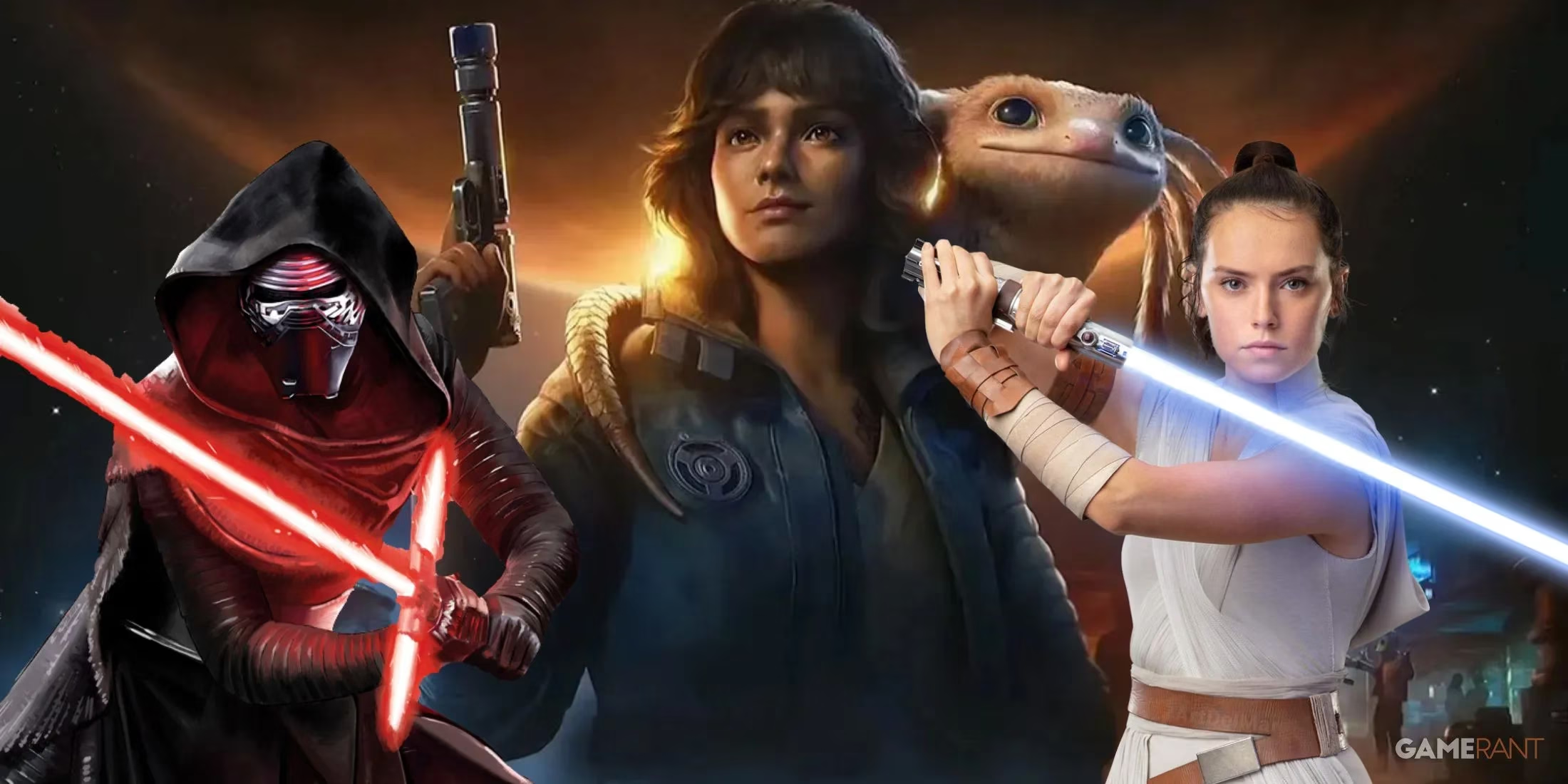
Set in the tense, hopeful period between The Empire Strikes Back and Return of the Jedi, Star Wars Outlaws places players in the worn boots of Kay Vess, an ambitious scoundrel carving her path through the galaxy's shadowy margins. Her journey across the perilous Outer Rim is one of survival and reputation, bringing her into direct contact with the sector's most notorious figures. This setting and its inhabitants serve a profound purpose beyond Kay's personal saga; they actively work to rectify a common, lingering critique of the sequel trilogy's world-building.
The sequel films did introduce their own memorable alien denizens—characters like the ingenious Anzellan mechanic Babu Frik or the demanding Crolute Unkar Plutt. However, in making space for these newcomers, the trilogy seemed to quietly exile a vast array of the franchise's foundational species. Where were the Rodians with their large, curious eyes? The elegant Twi'leks? The imposing Trandoshans, the gentle Ithorians, the industrious Sullustans, the fierce Aqualish, or the horned Zabraks? Their conspicuous absence across those three films created a subtle but significant void. For many fans, these species were the textured wallpaper of the Star Wars universe—a consistent visual and cultural thread across films, games, and books. Their removal made the galaxy feel strangely sterile, less like a lived-in, interconnected cosmos and more like a staged set with limited casting.
Star Wars Outlaws responds to this not with a whisper, but with a riotous, colorful shout. Developer Massive Entertainment has populated its digital worlds with a veritable census of classic aliens, making them not just background props but integral to the fabric of daily life. The game is a celebration of galactic biodiversity:
-
Quest-Givers & Civilians: Sullustans, Rodians, and Twi'leks are frequently encountered as mission providers or citizens going about their business.
-
Criminal Underworld: The Pyke Syndicate and Hutt cartels are authentically staffed by Pykes and Weequays, grounding the crime narratives in established lore.
-
Social Hubs: Within the first hour of play, one might meet a Zabrak mixing drinks at a cantina, a Mon Calamari sharing secrets in a corner, or a Trandoshan serving as an intimidating bouncer.
Simply walking the streets of any planet—from dusty Tatooine-style outposts to neon-lit urban sprawls—reveals a thriving ecosystem of familiar faces. This isn't mere fan service; it's a deliberate reconstruction of the galaxy's soul.
To deepen this immersion, Massive added a crucial layer of authenticity: language. A significant portion of the aliens encountered in the Outer Rim territories speak Huttese. This pidgin language, primarily associated with the Hutt cartels, is canonically the lingua franca of the galaxy's fringe worlds—exactly where Star Wars Outlaws is set. Hearing these guttural, familiar phrases exchanged between a Weequay guard and a Rodian merchant does more than any visual cue alone could. It ties the game's world directly to the auditory legacy of the original and prequel trilogies.
The combined effect of this visual and aural commitment is powerful. It transforms Star Wars Outlaws from a simple adventure game into a deeply authentic simulation of the Star Wars universe. The game argues, through its very design, that a galaxy's character is defined by the diversity of its inhabitants and the consistency of their cultures. Where the sequel trilogy sometimes felt like a reboot that forgot its own history, Outlaws feels like a homecoming. It understands that the strange, wonderful aliens are not just set dressing; they are the lifeblood of the setting, the proof that this is a vast, ancient, and interconnected civilization. In letting players lose themselves in a cantina filled with chattering Trandoshans, bartering Ithorians, and sly Twi'leks, Star Wars Outlaws does more than tell Kay Vess's story. It lovingly restores a sense of place that many feared was lost, offering a poignant reminder of what makes the galaxy far, far away feel like a place one could truly visit, and in doing so, it heals a small but meaningful part of the Star Wars legacy.