Hey there, fellow gamer! Let me tell you, diving into the galaxy of Star Wars Outlaws in 2026 has been an absolute blast. From the moment I blasted off with Kay Vess, I knew this was more than just another open-world adventure. One of the coolest surprises waiting in the cantinas and shadowy corners? The minigames! And let me be clear, they're not just simple time-wasters. I've spent more hours than I'd care to admit completely engrossed in one particular game: Kessel Sabacc. It instantly reminded me of those legendary, time-sinking minigames we all love from other RPG giants. So, grab a drink from Dex's Diner, and let me break down why Kessel Sabacc feels like a fantastic fusion of The Witcher 3's Gwent and Final Fantasy 7 Rebirth's Queen's Blood.
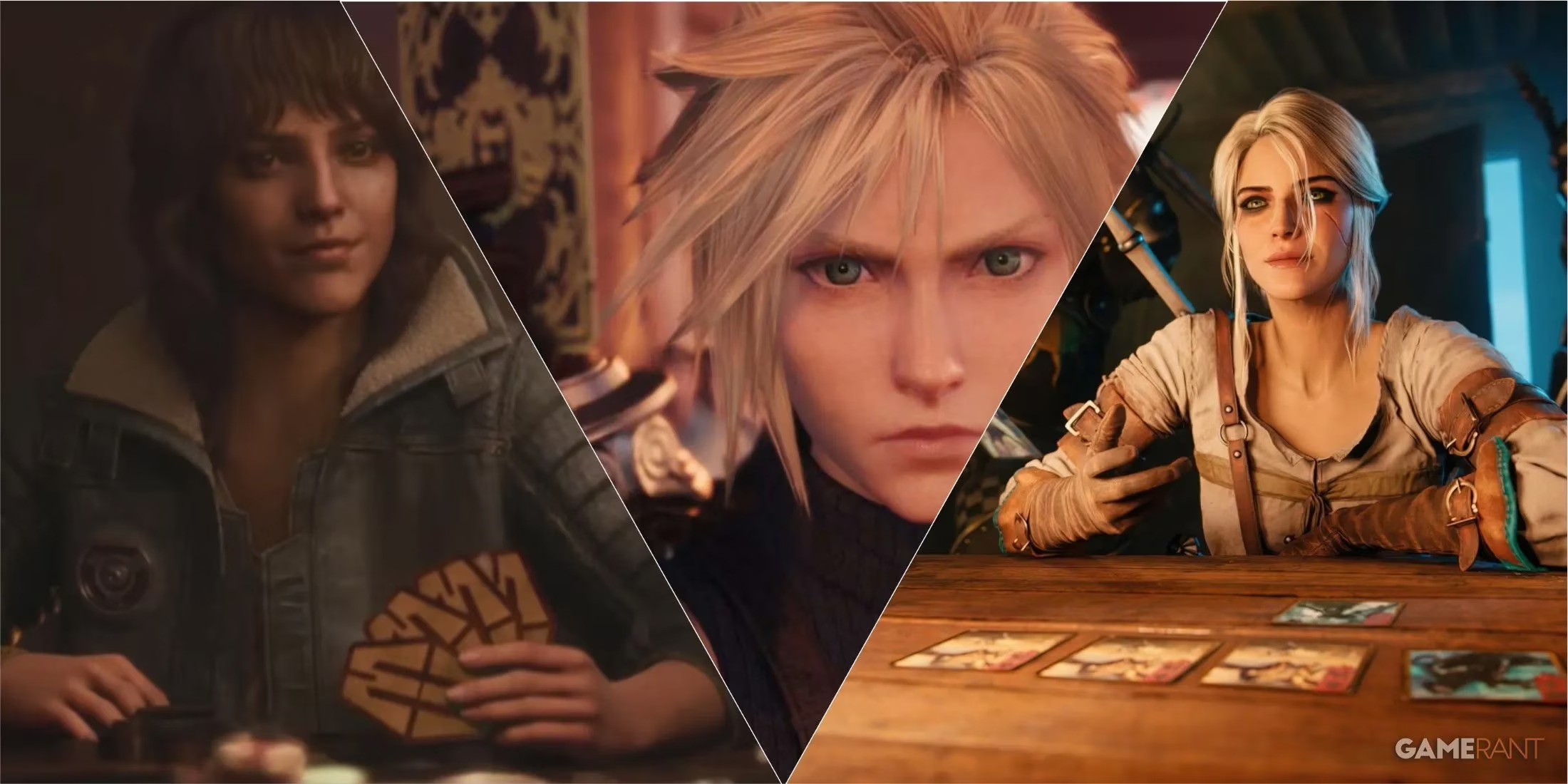
The Core of the Game: It's All in the Numbers
First things first, let's talk about the fundamental mechanics. What do Gwent, Queen's Blood, and Kessel Sabacc all have in common at their heart? Numbers. They are the lifeblood of these strategic diversions.
-
In Gwent, my goal was always to dominate each row on the battlefield. I'd slam down my highest-value unit cards, trying to out-muscle my opponent's strength total in that lane. It was a straightforward battle of numerical superiority.
-
In Queen's Blood, the concept was beautifully similar but with a spatial twist. I had to conquer three lanes by placing units with higher power values on strategic tiles, creating a fascinating puzzle of placement and numbers.
Now, here's where Kessel Sabacc puts its own spin on the formula. While it's absolutely centered on numbers, the objective is flipped! Instead of chasing the highest score, I'm desperately trying to get as close to zero as possible. Here's how a typical round feels:
-
I'm dealt two cards: one from the Blood suit, one from the Sand suit.
-
Each card has a numerical value.
-
When the round ends, I subtract one card's value from the other.
So, if I have a Blood-5 and a Sand-3, my score is |5 - 3| = 2. A score of 0 is a perfect "Sabacc" and an instant win! This reverse psychology from the usual "bigger is better" mentality is incredibly refreshing and requires a totally different kind of mental math.
The Strategic Twist: Special Abilities and Game-Changers
What separates a good card game from a great one? Layers of strategy. And this is where all three games truly shine by introducing special abilities that can turn the tide in a heartbeat.
Let's look at the classics:
-
Gwent's Special Arsenal: I still have nightmares about clever opponents using a Decoy card to yoink my best unit right off the board and back into their hand. The sheer variety of effects—from weather cards that crippled entire rows to medics that revived fallen allies—created a deep, evolving meta-game.
-
Queen's Blood's Tactical Plays: This game took lane control to another level. Cards like the Grenadier didn't just add power; they strategically weakened my opponent's forces on key tiles, making every placement a critical decision that rippled across the board.
Kessel Sabacc stands proudly in this tradition with its own suite of game-changers. You won't find complex positioning here, but the card effects are no less impactful:
| Card Type | Effect | How It Feels to Play |
|---|---|---|
| Impostor Card :joker: | Forces a dice roll to determine its value. | A total gamble! It's heart-pounding, praying to the Force for a low roll that pairs well with your other card. |
| Sylop Card :black_joker: | Automatically copies the value of your other card. | The ultimate power play! It guarantees you that coveted score of ZERO. Playing this feels like an instant victory lap. |
Kessel Sabacc's Secret Weapon: Shift Tokens
This is where Star Wars Outlaws adds a completely unique strategic layer that I haven't seen elsewhere. Before each Sabacc match, I get to choose three Shift Tokens to bring to the table. These aren't cards in my deck; they're one-use abilities I can activate at the start of a round. It's like building my own mini-strategy kit!
Imagine having these tools in your pocket:
-
A "Free Draw" Token: Need to fish for a better card? Pop this token and draw an extra one from the deck. It's a simple but powerful way to smooth out a bad hand.
-
A "Forced Pickup" Token :smirk: : This one is devious. I use it, and the next player in turn order is forced to draw a card on their turn, potentially ruining their carefully planned low score. It's a brilliant way to disrupt an opponent's rhythm.
This system means I'm not just playing the cards I'm dealt; I'm also managing a separate resource of tactical boosts. Do I use my token now to save this round, or do I hold it for a more critical moment later? This extra dimension of pre-match preparation and in-round resource management gives Kessel Sabacc a distinct flavor all its own.
Final Thoughts: How Does It Stack Up?
So, after countless rounds across all three games, here's my take. Kessel Sabacc may not have the sprawling, collectible card meta of Gwent or the intricate board-placement puzzle of Queen's Blood. Its scope is more intimate, focused on quick, tense rounds of calculation and bluffing.
But in terms of pure quality and addictiveness? It absolutely holds its own. It captures the same magical feeling of discovering a rich, optional game-within-a-game that makes you forget about saving the galaxy for a while. The combination of the unique "aim for zero" goal, the thrilling special cards, and the personalized strategy of Shift Tokens creates a beautifully balanced and deeply satisfying experience.
In 2026, with so many games vying for our attention, it's special to find a minigame that isn't just a checklist item but a legitimate highlight. Kessel Sabacc isn't a copy; it's a worthy successor that learns from the best, adapts the concepts to its own universe, and deals out a fantastic time. Now, if you'll excuse me, I think I hear a Rodian in the corner calling my bluff... time to go win some credits! :video_game: