The release of Star Wars Outlaws in 2024 gave players something they had dreamed about for decades: a true open-world scoundrel experience set in a galaxy far, far away. Finally, they could slip into the boots of Kay Vess, explore bustling underworld hubs like Mirogana, and chart their own path between syndicates on Tatooine, Kijimi, and beyond. It was fresh, gritty, and entirely different from the Jedi power fantasies that dominated the modern lineup. Yet for all its novelty, Outlaws also settled comfortably into a very familiar era. The rusty hulls of Star Destroyers lurked in every skybox, stormtrooper patrols dotted back alleys, and the Imperial security apparatus formed the central threat. That choice was no accident—the Age of the Empire has been the gravitational center of Star Wars storytelling since Disney acquired Lucasfilm in 2012, and Outlaws is simply the latest major video game to orbit it. Now, in 2026, as the industry looks ahead to what’s next, many players are asking: haven’t we seen enough Death Troopers and TIE Fighters for a while?
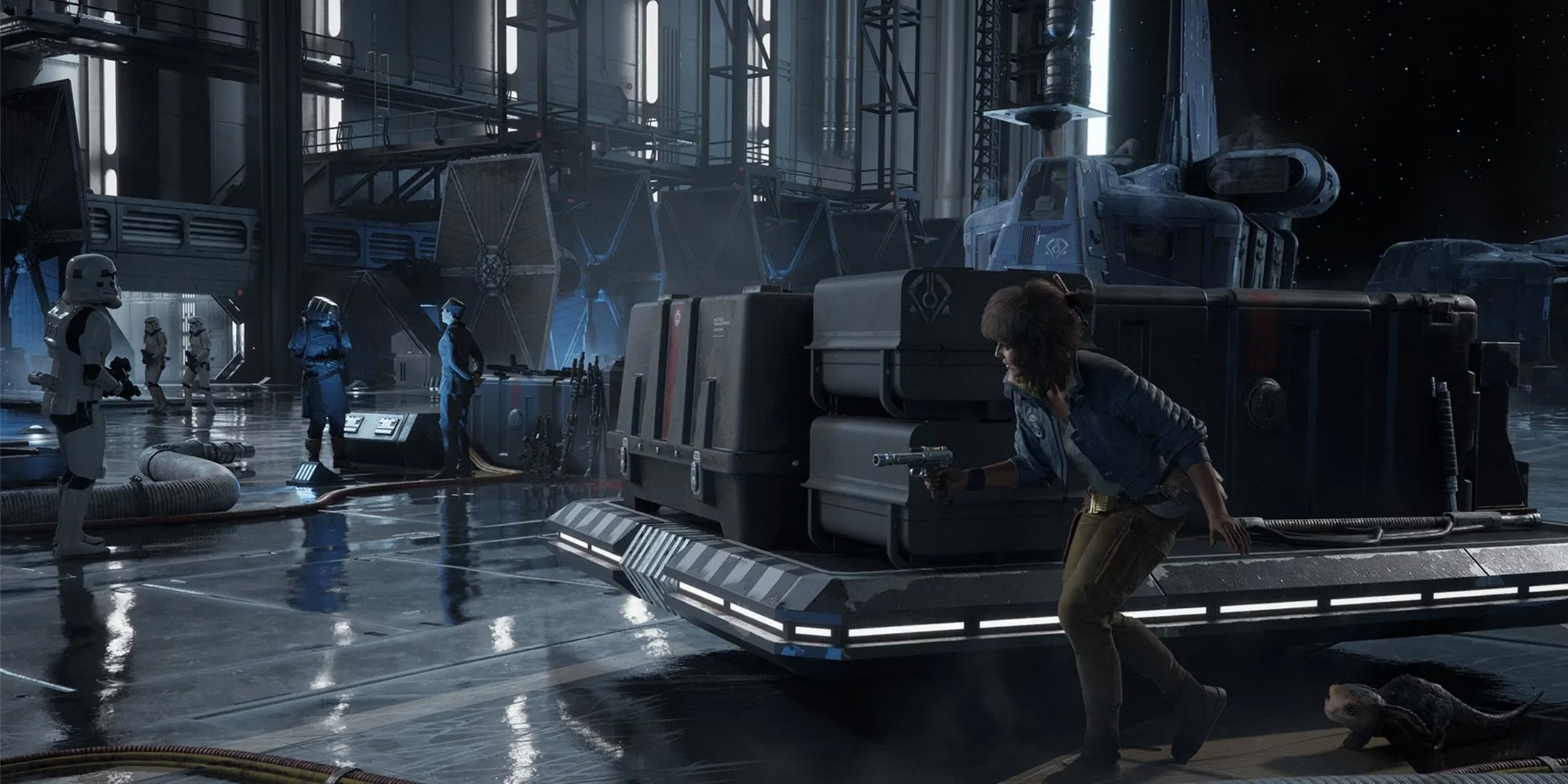
The franchise’s obsession with the Empire is not hard to trace. The original trilogy’s clash between the Rebellion and the Empire built the very foundations of Star Wars, and that conflict remains one of the most iconic good-versus-evil narratives in cinema. The prequels and The Clone Wars animated series temporarily shifted attention to the twilight of the Republic, but once Disney took the reins, the Empire came roaring back with shocking speed. Since 2012, the list of projects that have either taken place during the Imperial reign or dealt directly with its aftermath reads like an inventory of everything the franchise has produced. On the big screen, Rogue One: A Star Wars Story and Solo: A Star Wars Story plunged audiences right back into the height of the Empire’s power. Disney Plus then unrolled a near-constant parade of series tethered to the same period: The Bad Batch, Tales of the Empire, Andor, Obi-Wan Kenobi, The Mandalorian, Ahsoka, and The Book of Boba Fett. Even Skeleton Crew, which arrived in 2025, followed a group of kids lost in a galaxy still ruled by Imperial remnants. On the gaming side, the pattern is even more pronounced. Star Wars Battlefront and its sequel, Star Wars Jedi: Fallen Order, Star Wars Jedi: Survivor, Star Wars Squadrons, and now Star Wars Outlaws have all leaned heavily into the Empire as the central antagonist. The only major exceptions in recent memory have been The Acolyte, which explored the High Republic era in live-action, the seventh season of The Clone Wars, Tales of the Jedi, and the sequel trilogy films that moved the timeline forward.
There is a certain comfort in the Empire’s aesthetic—its brutalist architecture, its oppressive uniformity, its guttural Imperial March. It provides an instantly recognizable villain and a clear moral compass for any story. But the galaxy is impossibly vast, and it holds thousands of generations of history. When every other adventure relives the same 20-year window between Revenge of the Sith and Return of the Jedi, that vastness starts to feel suspiciously small. The High Republic, a golden age of Jedi exploration introduced through books and comics, offered a tantalizing glimpse of what a confident, peacekeeping Order looked like. The Old Republic era, immortalized by BioWare’s legendary RPGs, delivered epic Sith wars and philosophical divides that tested the very nature of the Force. Even the post-sequel era, with its fragile New Republic and the question of what rises from Palpatine’s ashes, remains largely untouched. Yet game studios continue to default to the same TIE Fighter-infested skies.
Star Wars Outlaws deserves credit for at least twisting the formula. It may be set during the Empire’s reign, but its focus is squarely on the criminal underworld, the syndicates, and the scoundrels who try to make a living on the fringes. Kay Vess doesn’t care about Rebel heroics or Imperial ideology—she just wants to survive and pull off the heist of a lifetime. This shift in perspective made the game feel refreshing even though its backdrop was familiar. The Empire functioned as an environmental hazard rather than the narrative’s entire reason for being. It’s precisely this kind of side-door storytelling that could sustain more Empire-era games without exhausting players’ patience. However, if that nuance is lost in the next wave of releases, fatigue will only deepen.
Looking forward from 2026, the horizon is still crowded with Imperial blueprints. Andor season two premiered this year, drawing critical acclaim for its grounded espionage thriller tone while once again keeping audiences inside the shadow of the Death Star’s construction. Ahsoka season two remains in production, promising more adventures that deal with Thrawn and the Imperial remnant. On the gaming front, Star Wars Jedi 3 is all but confirmed to continue Cal Kestis’s struggle against, you guessed it, the Empire. The glimmer of hope comes from projects like Star Wars Eclipse, which is reportedly set long before the Skywalker saga during the High Republic era. Whether Eclipse will actually escape development hell and deliver on that promise is another question entirely, but its very existence suggests that publishers recognize the hunger for something new.
The numbers tell a stark story. If you tally every major Star Wars game since 2015, the Empire has been the primary or secondary antagonist in nearly all of them. Below is a quick snapshot of the last decade’s big releases and their era commitments:
| Game Title | Release Year | Primary Era | Empire Involvement |
|---|---|---|---|
| Star Wars Battlefront | 2015 | Galactic Civil War | Full |
| Star Wars Battlefront II | 2017 | Galactic Civil War | Full |
| Star Wars Jedi: Fallen Order | 2019 | Rise of the Empire | Heavy |
| Star Wars Squadrons | 2020 | Post-Return of the Jedi | Heavy |
| Star Wars Jedi: Survivor | 2023 | Rise of the Empire | Heavy |
| Star Wars Outlaws | 2024 | Height of the Empire | Moderate (environmental) |
| Star Wars Eclipse | TBA | High Republic | None (presumed) |
| Star Wars Jedi 3 | TBA | Rise of the Empire | Expected heavy |
Sentiment among the community has shifted noticeably since 2024. Online forums and fan discussions are filled with calls for a game set during the Clone Wars, where players could command battalions or experience the front lines from a clone trooper’s perspective. Others dream of a Mass Effect-style RPG in the Old Republic, free from the constraints of canon Skywalker family drama. The desire for something that feels truly alien and ancient is palpable. When Star Wars Outlaws launched, its marketing leaned heavily on the promise of doing something different—and it did, in terms of gameplay tone. But its era choice still anchored it to an overmined vein of storytelling.
If the film and television branches of the franchise continue to dig deeper into the New Republic era and the Imperial remnant, video games have a golden opportunity to chart a separate course. They can take players to the founding of the Jedi Order, to the Mandalorian-Jedi wars, to the unexplored chaos of the post-sequel galaxy where a new type of dark side user might emerge. The technology is ready, the audience is eager, and the lore is sitting there untouched. Star Wars Outlaws proved that even within the Empire’s grip, a wildly different tale can be told. Now, hopefully, it closes the book on the Age of Empire games for a while, letting the next generation of interactive stories breathe in a galaxy without a Death Star lurking in the frame. If not, at the very least, future titles should follow Outlaws’ lead by focusing on the characters and corners that the movies never had time to explore. Let the rebels and the Inquisitors rest. There’s a whole galaxy waiting.