It\u2019s 2026, and the desert winds feel different now. Death Stranding 2: On the Beach is nearly here, and the buzz isn\u2019t just about new mechanics, bigger maps, or those slick weather systems everyone keeps dissecting. No\u2014what\u2019s really got people talking is Sam Porter Bridges himself. You look at the guy in early previews and, honestly, you barely recognize him. Talk about a glow-up, right? He\u2019s not the haunted porter we met back in the first game. Something fundamental has shifted, and it\u2019s not just the scenery.
Let\u2019s rewind to 2019\u2019s Death Stranding for a second. Sam was a man physically alone, sure, but emotionally? He was practically encased in carbonite. The aphenphosmphobia\u2014fear of being touched\u2014was only the surface symptom. Below that, he carried the weight of a lost wife and unborn child, plus the eerie burden of DOOMS abilities that made genuine connection feel like a threat rather than a comfort. Back then, his job as a porter wasn\u2019t just a career; it was a perfect mirror for his inner state. Constantly moving, always hauling something heavy, never stopping long enough to let anyone in. Even when Fragile, Deadman, Heartman, and Mama tugged at his walls, those interactions smelled more like necessity than friendship. Lou the Bridge Baby was the first crack in the armor, but for most of that journey, Sam wore his duty like a shield against everything he was afraid to feel.
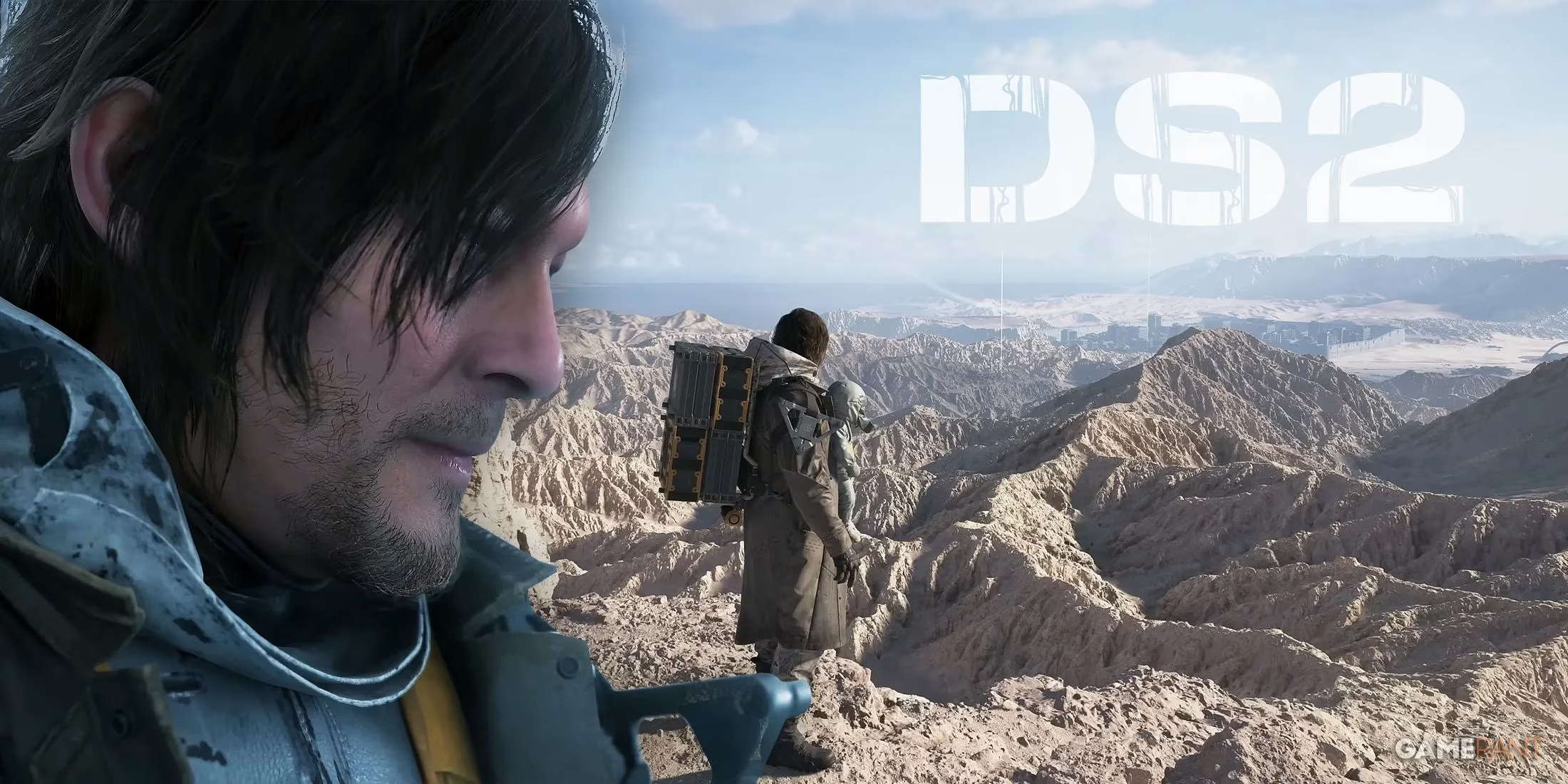
Fast forward to what we\u2019re seeing now. Previews paint a picture of Sam living quietly in Mexico with Lou, raising her\u2014not just surviving alongside her, but actually raising her. That\u2019s a huge deal. This isn\u2019t the same man who woke up in a cave groaning about connecting America. He\u2019s found peace, the kind that comes not from escaping pain but from processing it. The end of the first game handed him revelations that must have felt like tectonic plates shifting inside his chest. And now? He\u2019s not an untouchable ghost anymore. He\u2019s a father. A neighbor. Someone who stays put.
Naturally, trouble comes knocking. Fragile shows up with the kind of request nobody wants to hear\u2014something big, something that needs Sam\u2019s particular skill set. Here\u2019s where Kojima Productions pulls a neat little character trick. In the first game, Sam\u2019s entire journey was a reluctant march. He went because he had to, because duty wrapped in emotional avoidance looked exactly like heroism. He masked his trauma under the weight of responsibility, and we all nodded along. This time? Previewers note that Sam responds to Fragile not out of obligation, but out of choice. He\u2019d probably rather stay on that quiet patch of land, sipping something cool and watching Lou grow. But he gets up and goes anyway, and that\u2019s the whole point. The difference is like night and day, and you gotta hand it to him\u2014when a man who once ran from everything voluntarily steps forward, you know something rewired behind the scenes.
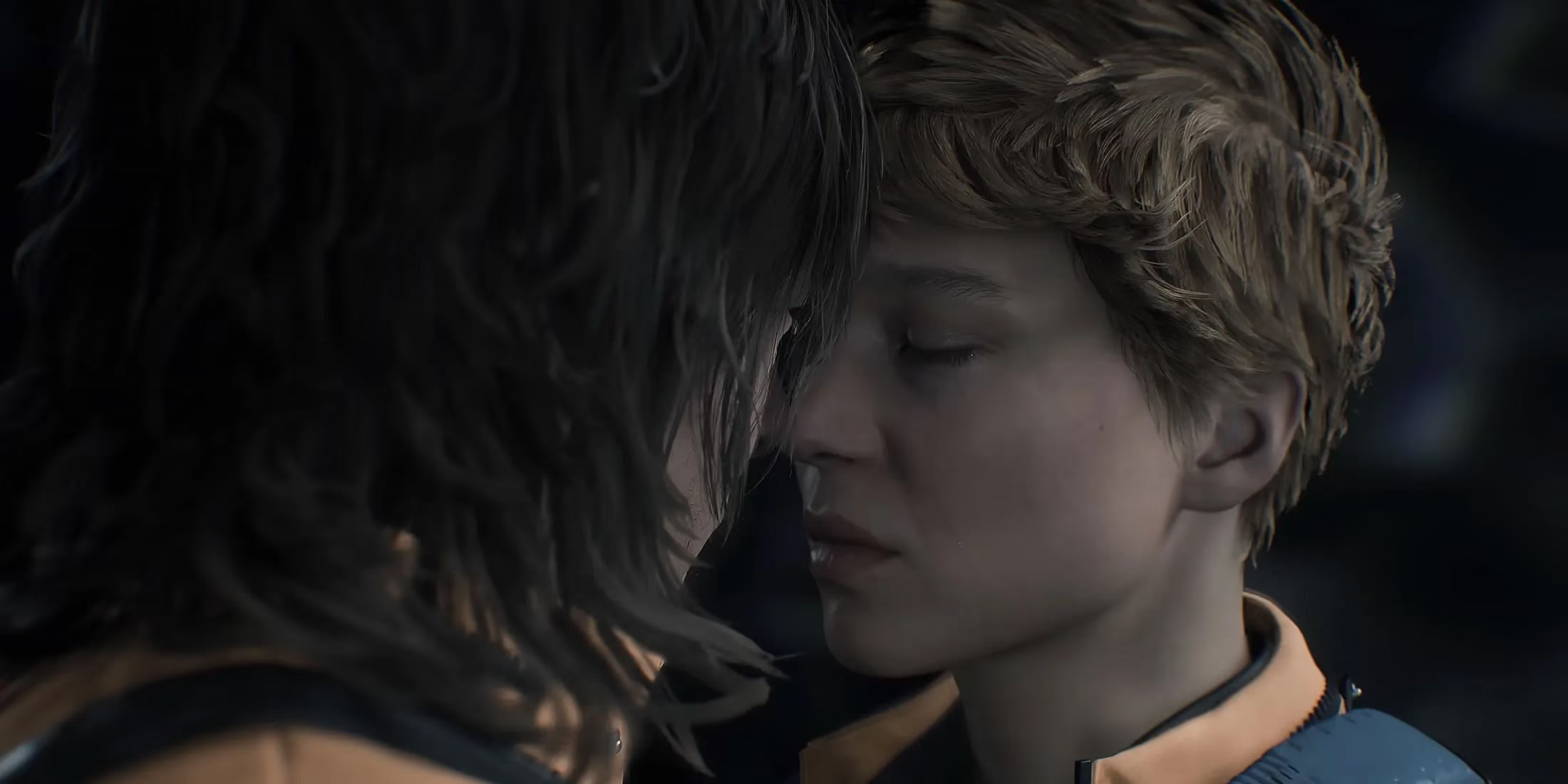
You can almost hear the conversation hanging in the air between them. It\u2019s not the desperate pact of two broken survivors anymore. It\u2019s something closer to trust, maybe even the early threads of something warmer. And yeah, some previews have been gently hinting at a romantic dimension, which would\u2019ve been unthinkable for the Sam of old. That\u2019s what makes Death Stranding 2 so intriguing from a narrative standpoint\u2014it\u2019s not just a sequel that pushes timelines forward, it\u2019s one that pours gasoline on the emotional arcs the first game only lit with a match.
This shift radiates outward. A Sam who chooses connection rather than avoids it is going to interact with the world differently. The sequel\u2019s pacing, already described as more fluid and less lonely, might actually owe a debt to where his head\u2019s at. After all, the Beach isn\u2019t just a physical location in this universe\u2014it\u2019s a state of being. A Sam who can willingly walk into the storm means he\u2019s no longer dragging his trauma behind him like a dead weight. That strength, that autonomy, will almost certainly redefine his bond with BB-28 (or whoever the new BB is), and probably alter how he\u2019s perceived by the chiral network of NPCs we meet along the way.
There\u2019s something quietly powerful about watching a character outgrow their armor. It would\u2019ve been so easy for the writers to reset him\u2014give him another excuse to mope, another tragedy to hide behind. Instead, they\u2019ve done the harder thing. They let Sam heal. Not perfectly, not without scars, but enough that his next adventure can be about something other than survival. It can be about meaning. About real, terrifying, wonderful connection. And if the early hands-on sessions are any clue, that newfound openness makes the gameplay moments hit differently too. Hauling cargo still strains your thumbs, but now it feels like a chosen burden, a path walked with purpose rather than just desperation.
So as we inch closer to launch day, keep an eye on Sam\u2019s face\u2014on the subtle calm that\u2019s replaced the perpetual grimace. The apocalypse is still out there, the rain still falls in strange patterns, and BTs probably still make your skin crawl. But the man at the center of it all isn\u2019t running anymore. He\u2019s walking forward. And this time, he\u2019s doing it because he wants to. In a world obsessed with rebuilding bridges, Sam finally found the one that matters most: the one inside himself.