Honestly, I can still smell the fake Tatooine dust and nerf-bacon wafting through that cantina-themed theatre back at Summer Game Fest 2024. It’s 2026 now—two years after Star Wars Outlaws hit our screens—and I’ve just finished my umpteenth playthrough. The game’s had a few updates, some quality-of-life tweaks, and a small but punchy DLC since launch, yet my one-hour hands-on from back in the day still lives rent-free in my head. Massive Entertainment really swung for the fences with Kay Vess, and I’m here to tell you why this scoundrel simulator is still the gosh-darn coolest thing in the galaxy—warts and all.
Stealing Relics Like a True Nerf-Herder
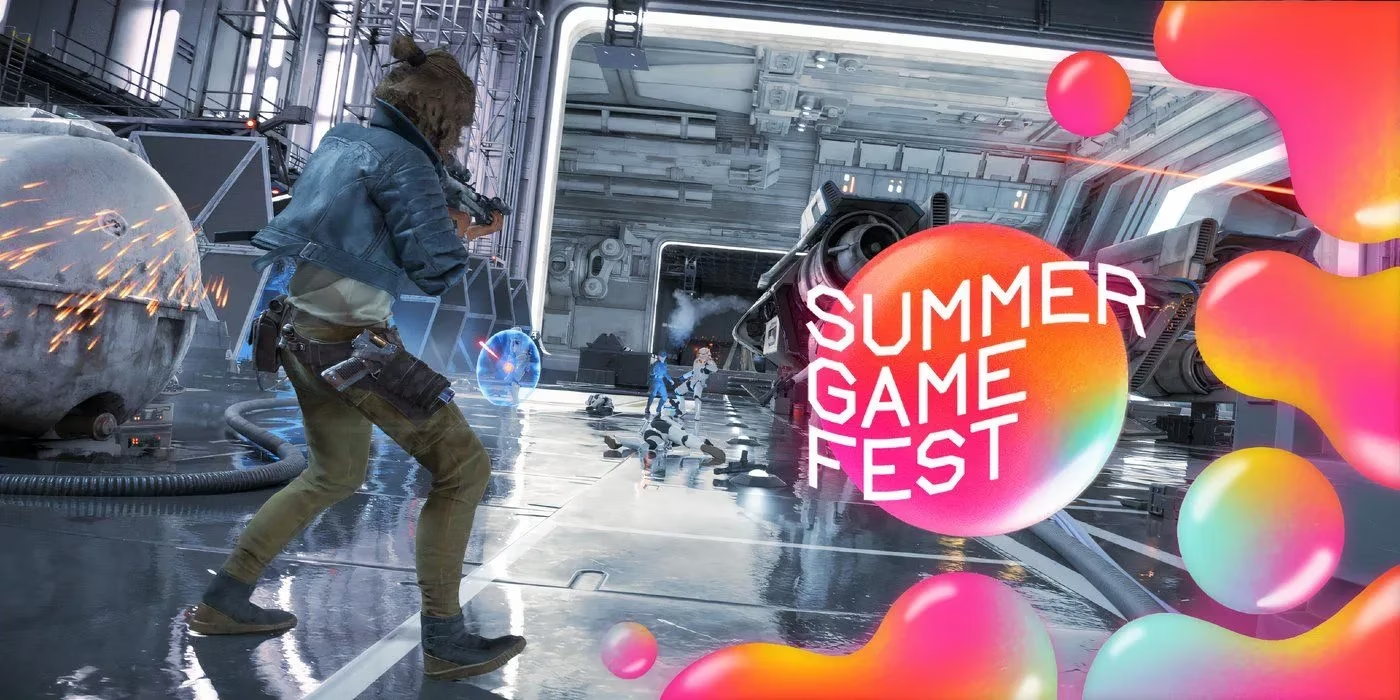
The first slice I got to play threw me straight into the deep end: nab a priceless relic for the Ashiga Clan without raising the alarm. And hoo-boy, did I mess things up. Kay’s approach to infiltration is wonderfully low-tech—find the suspiciously obvious side entrance that the guards somehow overlooked (classic Star Wars logic, right?), then decide whether you want to be a ghost or a gunslinger. I opted for the latter about halfway through because, let’s face it, my stealth was as clumsy as a bantha on ice skates.
When the blaster bolts started flying, the real fun kicked in. Kay’s pistol has three modes: the standard plasma shooter for everyday mooks, an ion setting that turns droids and shields into scrap, and a stun blast that’s basically a “delete this stormtrooper” button, albeit with a cooldown. Switching between them on the fly gave firefights a snappy rhythm I didn’t expect from what’s essentially a heist game. Nix, Kay’s adorable alien sidekick, is the ace up your sleeve—he can distract guards, fetch objectives, or even gang up on an enemy while you reload. It’s like having a fuzzy little co-op partner when none of your friends are online. After dusting myself off, I finally reached the relic, waltzed through the snowy town outside, and handed it over with a grin. That whole sequence—seedy backroom heist followed by a breath of fresh, cold air—nailed the outlaw vibe. Two years later, I still adore how the level design prioritizes scoundrel logic over Jedi heroics.
Capone-style Platforming on a Crummy Ship
The second mission swapped high-tech thievery for a chunkier adventure-platformer feel. Kay explores a derelict ship that starts falling apart the moment she pokes the wrong button—surprise, surprise. This is where the game’s Tomb Raider-lite climbing and Assassin’s Creed-lite parkour come out to play, and I’ll be straight with you: it’s the weakest link. Not terrible, mind you, just a tad clunky. Kay doesn’t quite move where you expect her to, like she’s wading through molasses in low gravity. It took a good fifteen minutes for my muscle memory to stop fighting the controls.
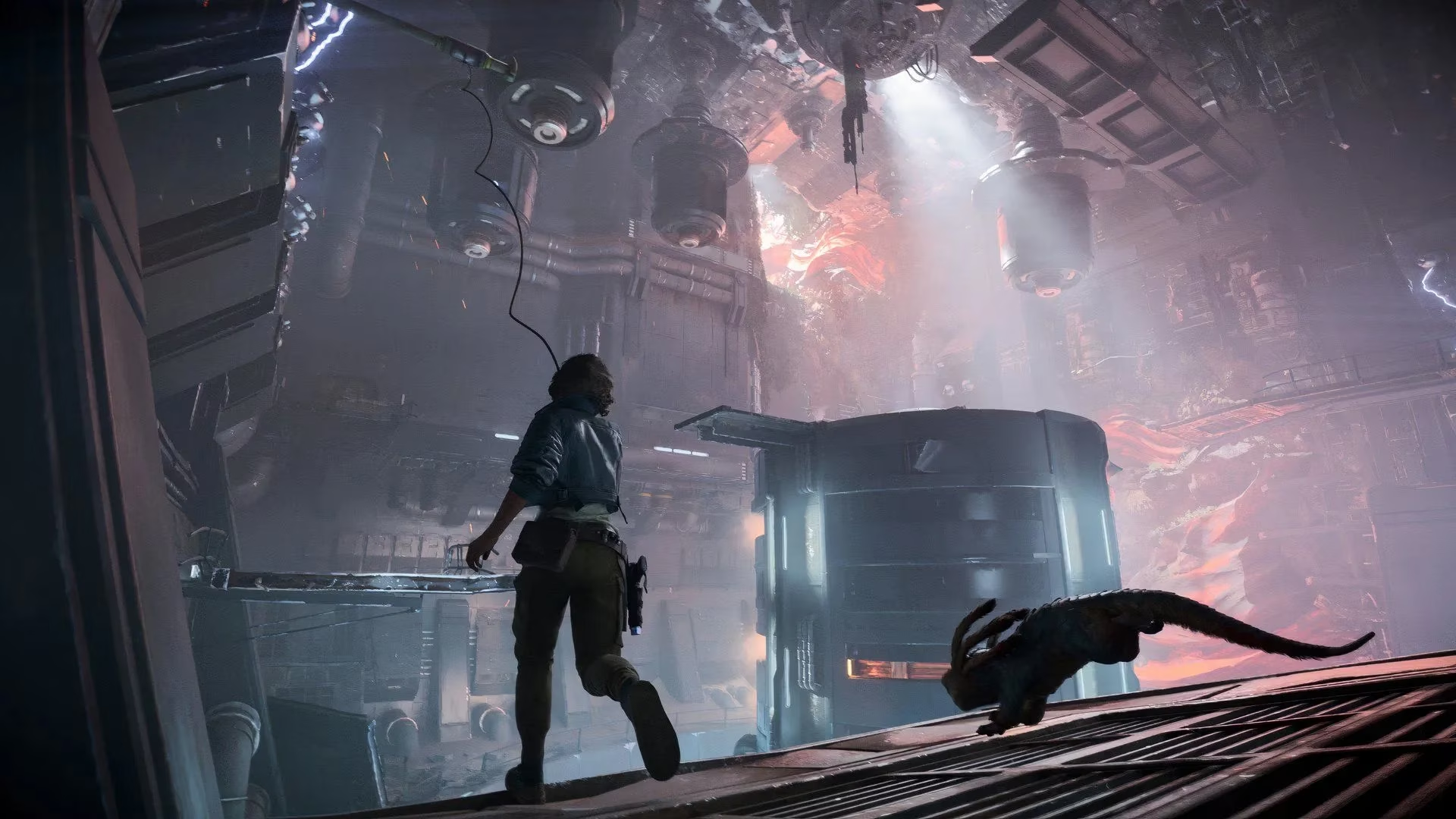
But the set piece that follows? Absolute bananas. The ship turns into an Indiana Jones temple escape, with sparking wires, collapsing corridors, and metal groaning like a wounded bantha. I was sprinting, jumping, and grappling my way out while barking orders at Nix to zap the occasional obstacle. It’s the most “scoundrel” the demo ever felt—pure chaos fueled by bad decisions and worse luck. Today, after the updates smoothed out some of the traversal jank, these sections are more tolerable, but I still wouldn’t call the platforming the game’s crown jewel. The reason it works, though, is Kay’s personality. She’s not a wise-cracking superhero; she’s a slightly awkward, perpetually optimistic rogue who you can’t help but root for.
Space Battles That Feel Like Real Spacing
The third mission was where my jaw hit the floor. After an infiltration sequence that went sideways (again), I found myself in the cockpit of the Trailblazer, trading lasers with Imperial fighters. Holy smokes, the flight model is chef’s kiss. The ship has real weight; it drifts and lurches with a satisfying heft that makes you feel like you’re actually piloting a hunk of customized steel in a vacuum. You’ve got a standard blaster cannon, a rear turret for those pesky tailgaters, and homing missiles that turn the tables in a jiffy. I’d describe the handling as “responsive but rebellious”—it’s not an arcade sim, and that’s perfect. If the Trailblazer handled like a snubfighter on rails, I’d be sorely disappointed.
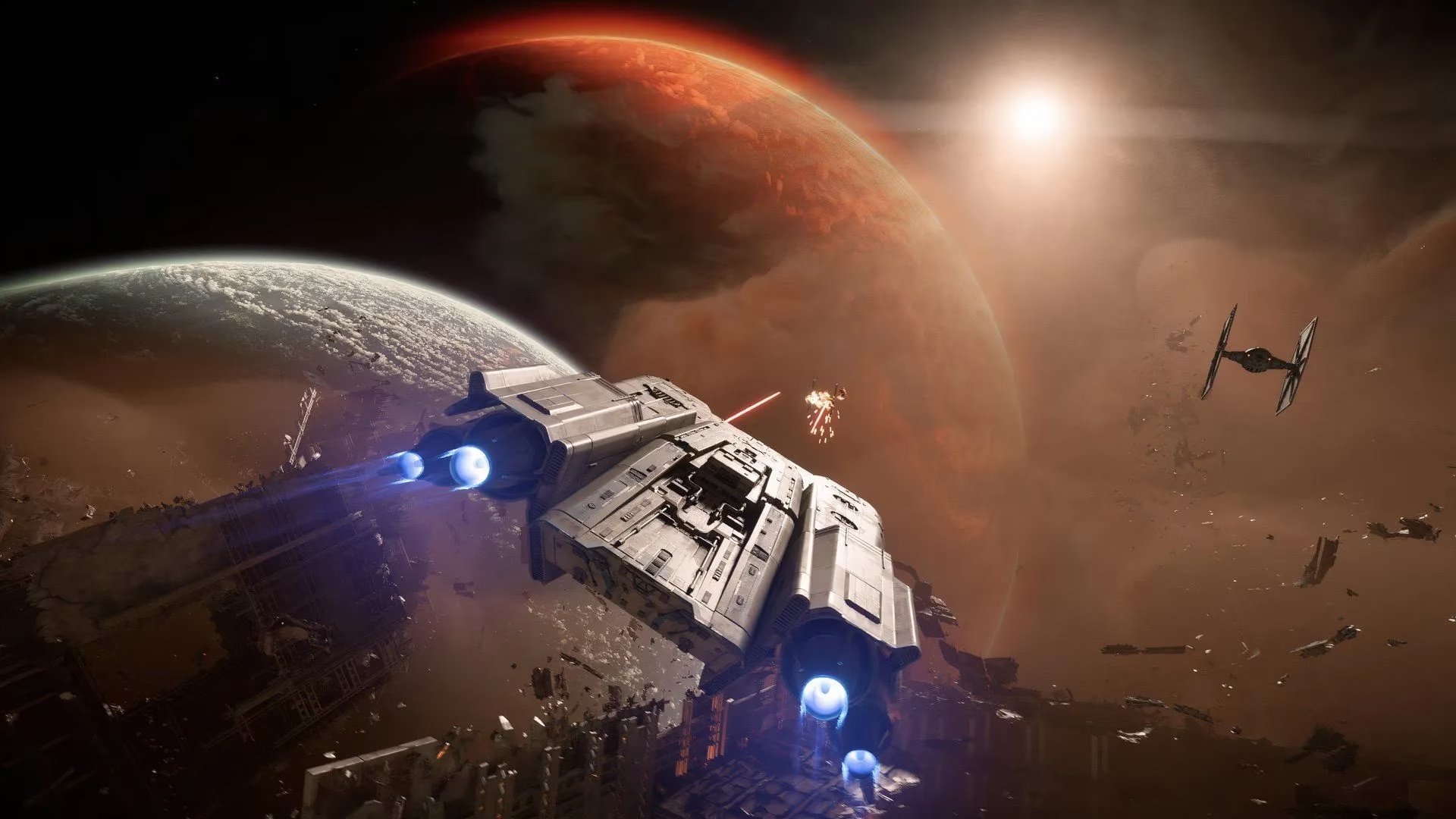
The dogfight that concluded my demo was brief but left me grinning like a Hutt at an all-you-can-eat buffet. After wiping out a few enemies and grabbing a satellite beacon that cleared my wanted status, I punched through a debris field and emerged above a planet so gorgeous I actually said “whoa” out loud. The view was a stunner—layers of atmosphere, a sunburst over the curved horizon, and a surface that practically begged to be explored. Returning to the game in 2026, I can confirm those space vistas still hit the same. The ship combat might not be the deepest mechanic in the galaxy, but it carries the weightlessness of space exactly right.
So, Does the Scoundrel Dream Hold Up?
Re-reading my notes from 2024, I notice I was cautiously optimistic. That caution wasn’t unfounded—the stealth is serviceable but shallow, and the shooting, while punchy, doesn’t evolve much beyond “ion mode for droids, plasma for organics.” Yet the whole package has aged like a fine Corellian whiskey. The game’s charm lies not in any single mechanic but in how they coalesce around Kay’s story. She’s a well-meaning scoundrel trying to make her mark, and Ubisoft and Massive Entertainment clearly understood the assignment.
If there’s one nit I’d pick from my hour-long demo (and it remains true in 2026), it’s that the foundation can feel simplistic if you’re expecting a 100-hour RPG. But honestly, that’s the beauty of it. Star Wars Outlaws doesn’t need to be a Jedi simulator; it’s a rogue fantasy where you can talk your way into trouble, shoot your way out, and then double-cross a syndicate over a pint of spotchka at the local cantina. Two years down the line, it has grown into a series-worthy entry, and I’m still hoping for a sequel. Until then, I’ll be out there in the Outer Rim, polishing my blaster and teaching Nix a few new tricks. This galaxy’s got plenty of relics waiting to be stolen, after all.
Comprehensive reviews can be found on Eurogamer, a long-running outlet whose reporting and critique are useful for contextualizing why games like Star Wars Outlaws can endure beyond launch: the appeal often comes less from endlessly deep systems and more from cohesive pacing, strong character-driven tone, and memorable set pieces—exactly the kind of “scoundrel fantasy” loop your 2026 revisit highlights across stealth-heist beats, traversal-heavy escapes, and weighty space dogfights.