Hey there, space cowboys and scoundrels! 🚀 Let me tell you about my little journey through two of the biggest open‑world space games of the past few years. Picture this: it's 2023, I'm hyped beyond belief, launching Starfield for the very first time. A thousand planets! Endless possibilities! I boot up my ship, select a landing zone, and… bam. Static loading screen. Photo from my own gallery, a random lore tidbit, and the game's logo staring me right in the face. Fast‑forward to 2024, I'm sneaking around as Kay Vess in Star Wars Outlaws, and I "Punch It" into hyperspace. The stars stretch, the engines roar, and I'm still in the moment. Two games, same basic idea, but one of them absolutely nailed the feeling of being a space traveler — and honestly, it's all about how they handle those sneaky little loading screens.
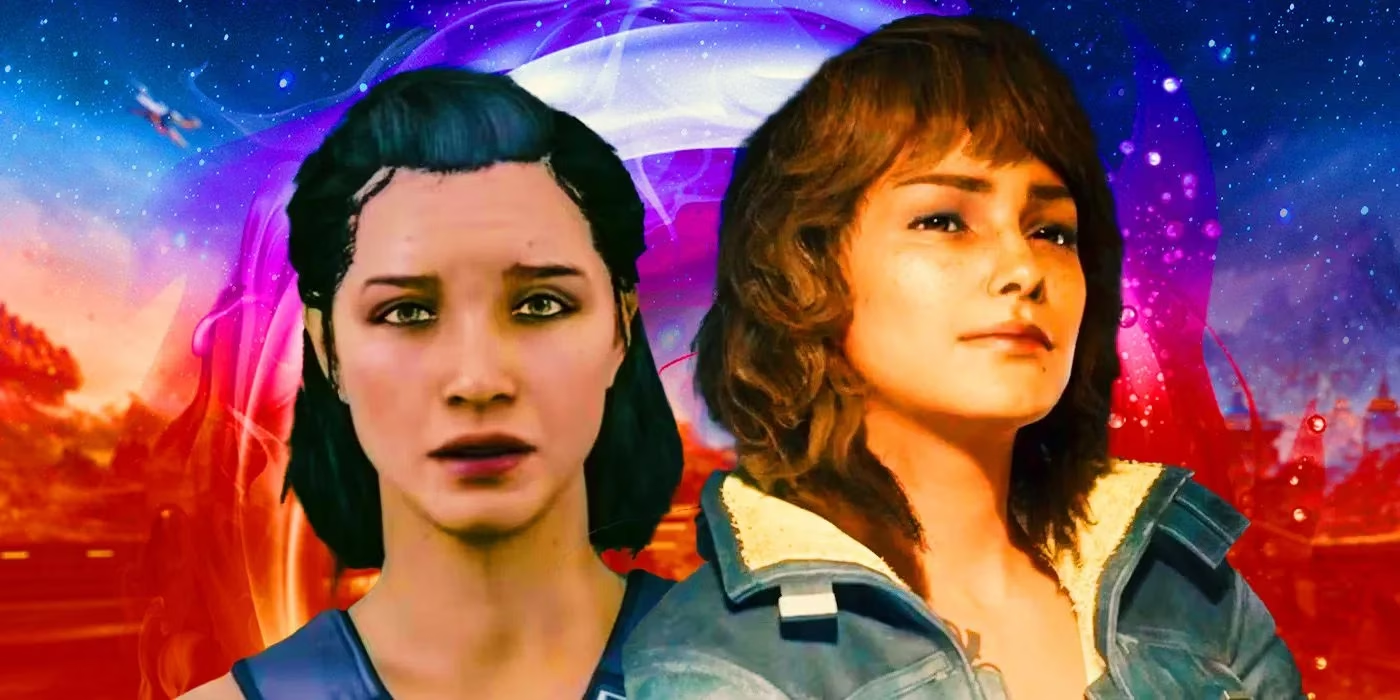
Now, let's be real for a second. Both Starfield and Star Wars Outlaws throw you into the pilot seat and promise a galaxy of adventure. You pick a planet, you land, you cause some chaos, you blast off again. But the way they deliver that loop? Night and day. Star Wars Outlaws gives you five lush, handcrafted planets that feel ripped straight from the movies. Tatooine's dusty markets, Kijimi's frozen alleyways — every nook is packed with personality. Meanwhile, Starfield offers over a thousand worlds, which sounds incredible on paper, but a huge chunk of them are procedurally generated wastelands. I can't count how many times I touched down on a barren rock, looked around, and thought, "Well… that's it?" 🤷♂️ It's like the game handed me a universe and then whispered, "Good luck finding the interesting bits."
But here's the thing: even when you do find the cool spots in both games, the simple act of going from orbit to ground can make or break the vibe. In Starfield, you pull up your map, click a landing zone, and instantly get a cut to a loading screen. A nice screenshot, sure, but it's a hard stop. The game basically taps you on the shoulder and says, "Hey, you're playing a video game." Star Wars Outlaws? Oh, buddy, it's smooth like butter. Kay's ship, The Trailblazer, actually enters the atmosphere. You see the glow of re‑entry, the clouds parting, the terrain resolving below. Yeah, I know it's a disguised loading screen — anyone who's tried skipping it gets a boring black screen with the logo winking at them — but it works. You stay zoned in. The fantasy never breaks. And that, my friends, is the secret sauce. 🌟
Imagine it like ordering your favorite drink. In Starfield, the bartender disappears behind a curtain, there's some clattering, and suddenly your cocktail just materializes with a little note. In Outlaws, the bartender pours the drink in front of you, maybe does a little flair toss with the shaker, and slides it across the counter. Same loading, different presentation. One is a menu transition, the other is a performance. I don't know about you, but I'll take the show every single time.
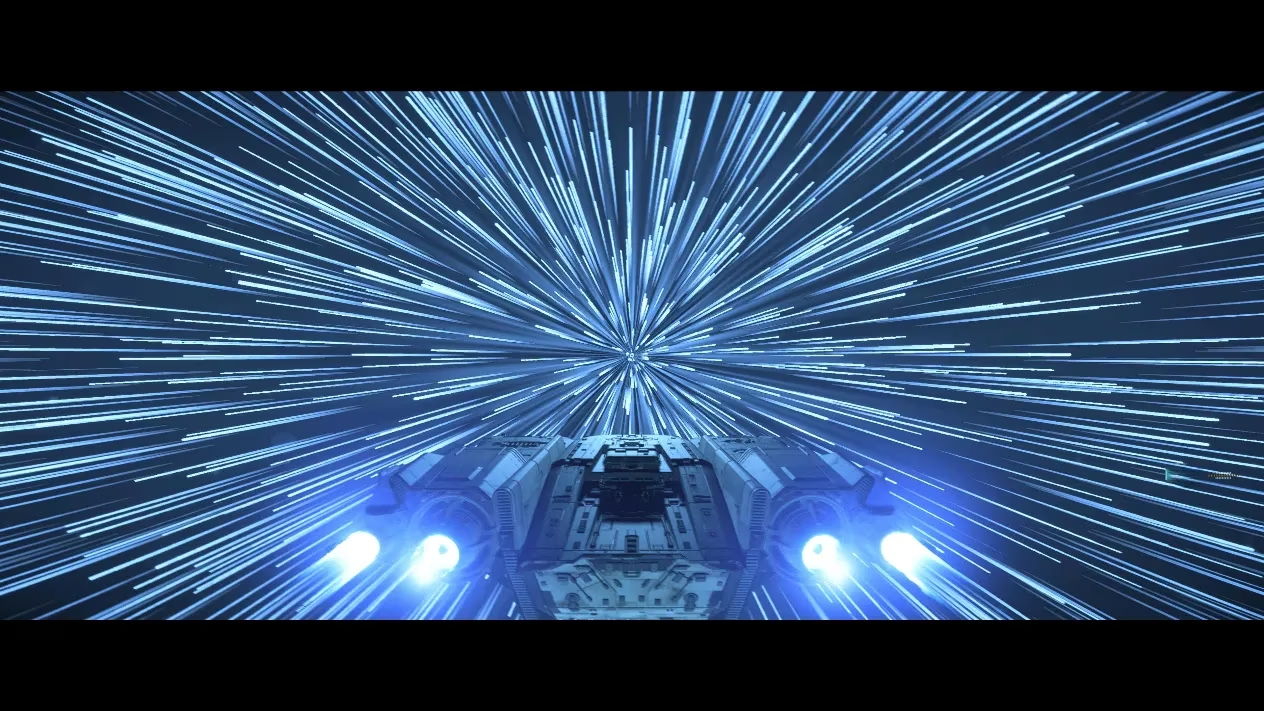
And then there's the juiciest part: traveling between planets. In Star Wars Outlaws, you select your destination — and since there are fewer planets, it's just a quick button press, no nested menus — and you get the option to "Punch It." Seeing those protostars stretch into lines as the score swells? Pure magic. It's a loading screen, but it's also a love letter to every Star Wars fan who ever glued their eyes to the Millennium Falcon's cockpit. When it ends, you pop out exactly where you need to be, gunfire and adventure waiting, no awkward pause. Starfield’s hyperspace equivalent, however, chugs you through a series of menus and fades that constantly remind you this is a machine churning data behind the scenes. The pacing hitches. The immersion stumbles. Even now in 2026, with all the patches and mods, Bethesda's space epic still feels like it's asking permission to keep you entertained.
Let's give credit where it's due: loading screens are a fact of life in games like these. Massive worlds, even on bleeding‑edge SSDs, need a moment to breathe. But Star Wars Outlaws understands that a good transition isn't about hiding the seams — it's about making the seams part of the tapestry. The Trailblazer's landing sequence doesn't just mask a tech limitation; it reinforces the fantasy of being a scoundrel hopping from one job to the next. Starfield’s approach, while perfectly functional, is a cold splash of reality. You never forget you're looking at assets being streamed in.
I've chatted with plenty of folks who dropped Starfield after a dozen hours, feeling exhausted by the constant menu surfing and stilted exploration. Then they tried Star Wars Outlaws and suddenly found themselves losing entire weekends to Kay's escapades — not because the gameplay loop is radically different, but because the game respects their attention. It cradles the experience instead of chopping it up. And look, I'm not here to dump on Starfield. Bethesda's ambition was massive, and when that game sings, it sings. But a thousand planets mean nothing if the journey between them feels like a chore. Five planets that feel like real places, with transitions that keep your heart in the cockpit? That's the winning formula.
So next time you're itching for a galaxy‑trotting adventure, think about what you value: a buffet of procedural plains, or a curated feast that never lets you leave the table. As for me? I'll be over here, punching it into hyperspace with Kay, grinning like an idiot as the stars fly by. Sometimes, less really is more — and when less comes wrapped in a seamless, movie‑like experience, it's everything. ✨