I can still feel the chill down my spine from the moment Konami announced they were dragging Silent Hill out of its foggy purgatory and back into my nightmares. The Silent Hill 2 remake was a glorious, gut-wrenching appetizer, but now, in 2026, my soul is screaming for the main course: Silent Hill F. The wait is a special kind of psychological torture, a slow-burn horror all its own. But I, a dedicated survivor of countless pixelated terrors, have found a way to endure. I’ve plunged headfirst into the abyss, seeking out games that drip with the same dread, whisper the same unsettling themes, or simply hold a piece of the Japanese horror soul that Silent Hill F promises to unleash. Buckle up, fellow sufferer, as I recount my desperate, thrilling journey through the games that kept me sane while waiting for the fog to roll in again.
Let’s start with a neon-drenched fever dream. Ghostwire: Tokyo is a wild, spectral rave compared to the somber funeral march I expect from Silent Hill. The Shibuya Scramble is awash in ethereal light and digital ghosts, not rust and decay. Yet, the moment I started purging the city of Visitors with my elemental hand gestures, I felt a connection. Urban Japan, twisted by an occult catastrophe, overrun by entities born from folklore and fear—it’s a concept that resonates deeply. Where Silent Hill has its Order, Ghostwire has its Hannya-masked occultists. Sure, I became a spell-slinging exorcist powerhouse here, a far cry from the vulnerable everyman of Silent Hill. But honestly? It felt good. By the time Silent Hill F drops, I’ll have honed my monster-clearing skills to a fine edge. The physical threats will be nothing. It’s the psychological ones I’ll need to worry about… and this next game prepared me for exactly that.
Silent Hill: The Short Message was Konami’s free, terrifying “welcome back” gift, and it felt like a direct transmission from the future of the series. Playing as Anita, I wasn’t just running from monsters; I was drowning in the all-too-real horror of adolescent anguish, jealousy, and brutal bullying. The environment of the abandoned apartment complex, known as the Villa, was a character in itself, shifting and whispering with malice. And then there was Sakura Head. Oh, that beautiful, petrifying abomination. A monster of cherry blossoms and despair, it felt like a direct prototype for the floral horrors teased in the Silent Hill F trailer. Dodging its relentless pursuit through narrow hallways, piecing together the tragic story through scattered notes and haunting FMVs… it was a masterclass in modern, minimalist psychological horror. It proved that the heart of Silent Hill—the personal demons made manifest—was not only still beating but evolving.
To truly understand the potential mind behind Silent Hill F, I had to dive into the rabbit hole of Ryukishi07. I spent weeks immersed in the world of Higurashi: When They Cry. At first, the simple visuals and slow-burn storytelling of the visual novel tested my patience. But then, the paranoia set in. The creeping dread. The cyclical, inescapable violence in the seemingly idyllic village of Hinamizawa. Ryukishi07 has a terrifying talent for weaving mundane social anxieties into cosmic, bloody horror. Friendships become traps, trust becomes a weapon, and the past is a hungry ghost. Experiencing his narrative craftsmanship firsthand has me utterly convinced: Silent Hill F won’t just be scary; it will be psychologically devastating in ways we can’t yet fathom. The motifs of communal guilt, hidden histories, and the monstrous side of human nature feel like a perfect fit for the Silent Hill universe.
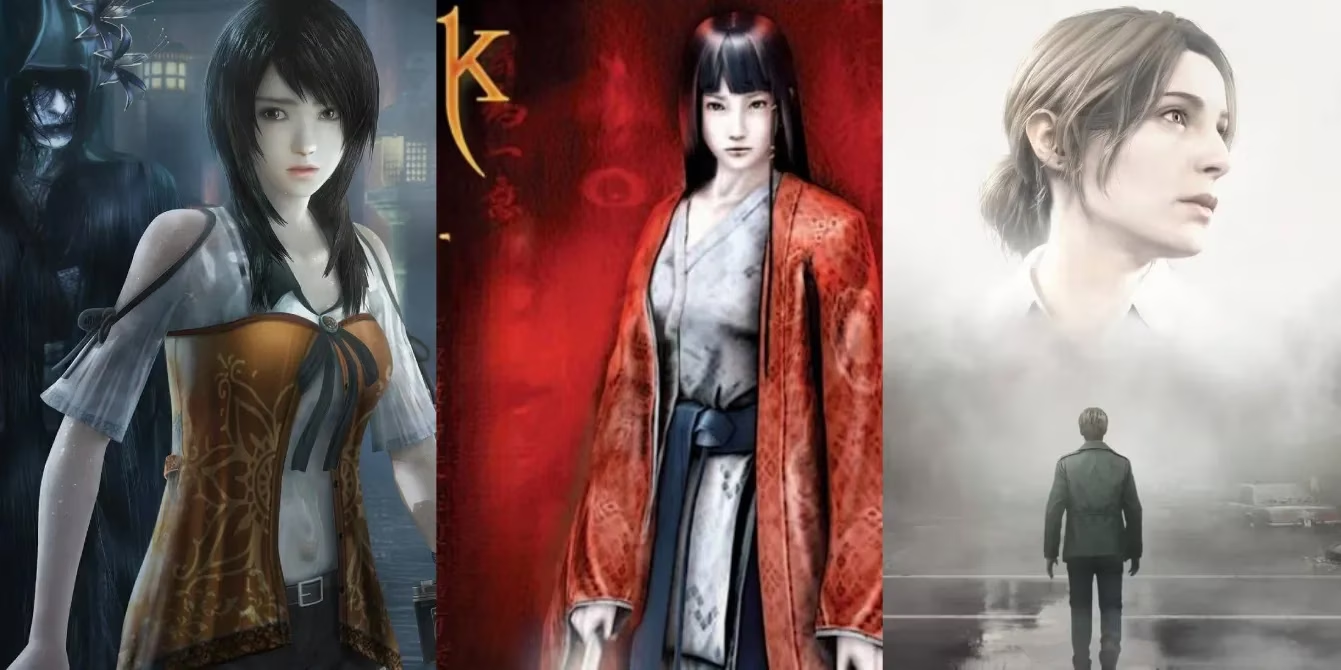
For a dose of pure, traditional Japanese horror, I turned to the legends. The Fatal Frame series remains the undisputed king of “camera-as-weapon” terror. I revisited Maiden of Black Water on modern hardware, and the sensation of peering through the Camera Obscura’s lens, waiting for a ghost to materialize just so I could exorcise it, is uniquely paralyzing. The themes of lingering spirits, tragic afterlives, and cursed locations are a direct throughline to Silent Hill’s own preoccupations. It’s a different kind of fear—more spiritual, less psychological—but the atmosphere of profound sorrow and dread is identical.
My quest for authentic, historical Japanese horror led me to a true grail: Kuon. Tracking down a copy for my old PS2 was a quest worthy of its own survival horror game, and my wallet still whimpers at the memory. But it was worth every penny. Set in the Heian period, Kuon trades rusty hospitals for elegant, decaying manor houses shrouded in mist and ancient magic. The atmosphere is thick with a historical eeriness, a sense of horror rooted in a different time. With Silent Hill F abandoning the American Midwest for Japan, playing Kuon felt like studying the source material. The aesthetics of old Japan, twisted by supernatural evil, provided a hauntingly beautiful blueprint for what the new game could achieve.
For a change of scenery (though not of terror), I ventured to 1960s Taiwan in Detention. Trapped in the rain-lashed Greenwood High School during the White Terror period, the horror here is twofold: the literal ghosts haunting the halls, and the oppressive political terror lingering in the air. The way the school environment subtly shifts, revealing its bloody history and trapping the protagonists, felt intimately familiar. It’s Silent Hill’s Otherworld transition, executed with a quieter, more mournful grace. The dread isn’t loud; it’s a cold whisper in a dark classroom, a lingering gaze from a faceless spirit you must silently slip past. It’s a brilliant reminder that the most effective horror is often a reflection of real-world trauma.
Finally, I returned to where the modern revival began: the Silent Hill 2 Remake. I had my doubts, I confess. Could any team truly capture the soul-crushing weight of James Sunderland’s guilt? The answer was a resounding, heartbreaking yes. Bloober Team didn’t just remake a game; they re-animated a masterpiece with horrifying new clarity. Walking through the foggy streets, the enhanced audio making every shuffle and whisper a threat, facing Pyramid Head in stunning, terrible detail… it was a revelation. It reinforced everything I love about this series: the deeply personal stories, the monsters as manifestations of sin, the unbearable weight of grief. If Silent Hill F, bolstered by Ryukishi07’s pen and a fresh Japanese setting, can even capture half of this emotional and psychological depth, we are in for one of the greatest horror experiences of our time.
My journey through these shadowed worlds has been more than a way to kill time. It’s been an education in dread, a pilgrimage through the various temples of horror that Silent Hill F seems poised to unite. From neon specters and floral monsters to historical ghosts and cyclical curses, I’ve felt every flavor of fear imaginable. I am now, officially, a connoisseur of terror. My nerves are shot, my sleep is haunted, and I couldn’t be more ready. Bring on the fog, Konami. Bring on the sirens. Silent Hill F, my body (and my traumatized psyche) is ready.