The desolate, hauntingly beautiful landscapes of Death Stranding 2: On the Beach promise more than just perilous deliveries; they herald a significant evolution in how players confront danger. Level designer Hiroaki Yoshiike's recent confirmation that combat will be emphasized in new ways marks a pivotal shift from the first game's philosophy. Where the original often presented combat as a cumbersome, often avoidable obstacle during cargo runs, the sequel, driven by Hideo Kojima's vision, is weaving it more intricately into the fabric of the journey. This shift feels deliberate, a response to both player feedback and a desire to expand the game's tactical vocabulary. The initial game's brilliance lay in its serene traversal puzzles and unique social mechanics, but the potential for deeper, more dynamic conflict always simmered beneath the surface, waiting to be fully realized. The sight of Sam, or perhaps a new protagonist, silhouetted against a treacherous mountain pass now carries the weight of potential confrontation, not just environmental hazard. 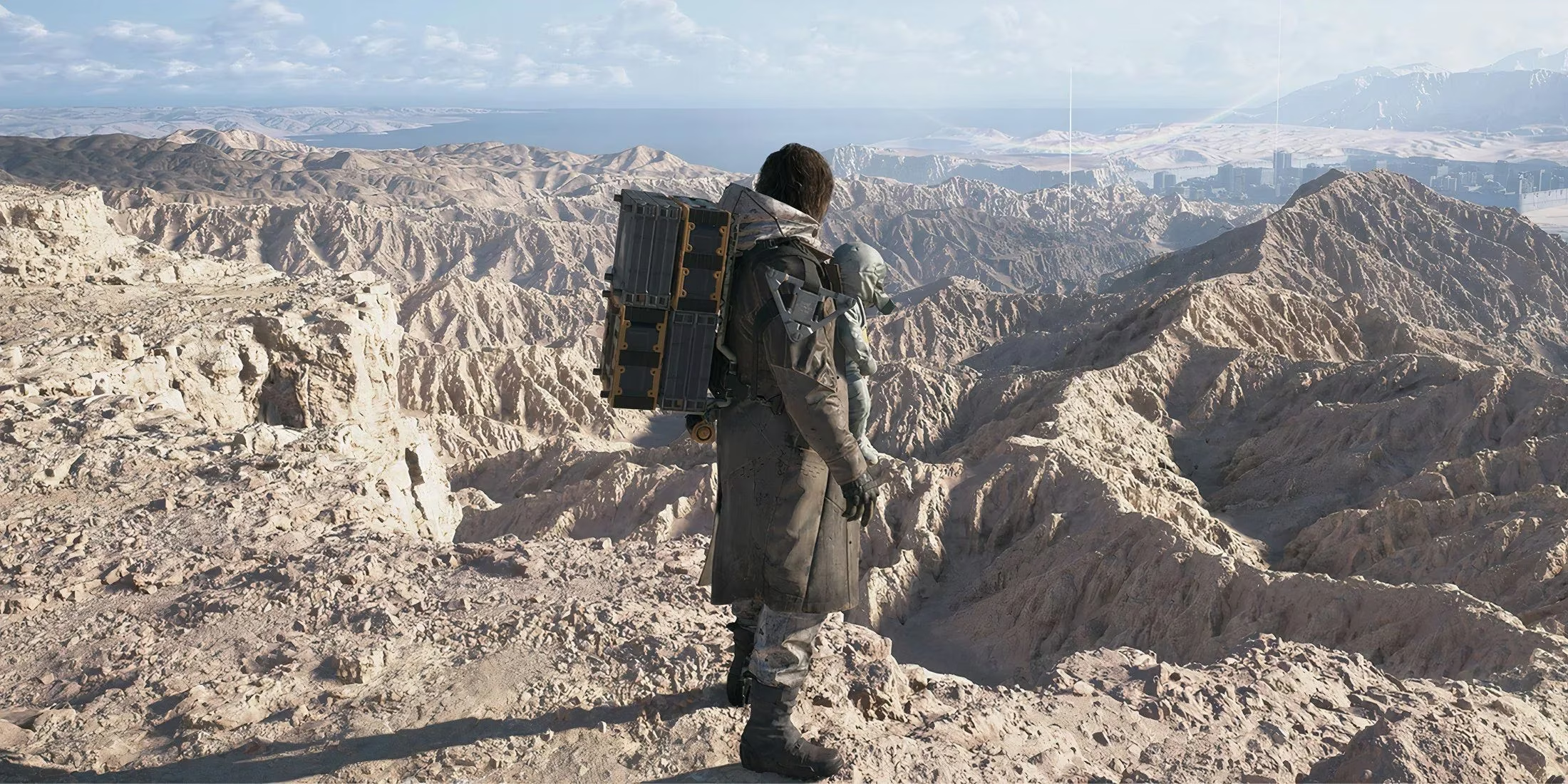
A Clearer Path Through Conflict
Yoshiike, speaking in Edge magazine, crystallized the new approach: combat in Death Stranding 2 will be "clearer." This clarity manifests as three distinct, viable strategic pillars available to players at any encounter:
-
Engagement: The direct approach. Players can choose to confront hostile entities head-on, utilizing an expanded arsenal and presumably refined mechanics. This path promises more visceral action than its predecessor offered as a primary option.
-
Stealth: Drawing inspiration from Kojima's legendary Metal Gear franchise, stealth is no longer a niche tactic. Players can silently eliminate threats, a strategy Yoshiike hinted was impractical in the first game. This suggests significant improvements to enemy awareness cycles, takedown mechanics, and environmental cover systems.
-
Avoidance: The core spirit of the original remains intact. Players retain the freedom to completely bypass conflict, navigating the treacherous terrain to slip past dangers unseen. This path is expected to still require careful planning and environmental mastery.
The genius lies not just in offering these choices, but in ensuring each feels genuinely viable and rewarding within the game's unique world. It transforms encounters from binary 'fight or flight' moments into complex tactical puzzles.
The Adaptive Adversary: Smarter, More Reactive Foes
This three-pronged approach wouldn't resonate without a worthy adversary. Death Stranding 2 boasts significantly improved and advanced enemy AI, a cornerstone of the revamped combat experience. Yoshiike detailed key enhancements:
-
Heightened Alertness: Enemies possess greater sensory range, detecting suspicious activities from much farther distances. A misplaced footstep or a glint of equipment might now carry consequences across a wider radius.
-
Intelligent Sound Reaction: Sounds won't just trigger a simple alert state; enemies will react more intelligently. They might investigate the source cautiously, call for reinforcements, or set up ambushes based on auditory cues.
-
Tactical Response: Gone are the days of predictable, single-minded chases. Hostile entities will employ a wider array of tactical options when responding to the player. This could involve flanking maneuvers, coordinated attacks, using the environment strategically, or even tactical retreats to regroup.
This adaptive AI promises to make every encounter feel dynamic. Choosing stealth? The AI will actively search and patrol more effectively. Choosing direct combat? Expect enemies to utilize cover and coordination. Choosing avoidance? The environment itself becomes a more critical factor as smarter patrols cover routes more thoroughly. The world feels more alive and reactive to the player's presence and choices.
Beyond Nostalgia: Metal Gear's Tactical Legacy
The nods to Metal Gear Solid within Death Stranding 2 appear to extend far beyond visual homages or thematic echoes. Yoshiike's emphasis on viable stealth, particularly the ability to eliminate enemies silently, feels like a direct channeling of the tense, methodical gameplay that defined the Metal Gear series. This integration feels less like fan service and more like a natural evolution, borrowing proven tactical depth to enhance Death Stranding's own unique identity. The prospect of navigating a BT-infested zone or a MULE camp using classic Metal Gear-style stealth mechanics – marking enemies, utilizing distractions, executing precise takedowns – is incredibly tantalizing. It suggests a maturity in the sequel's design, acknowledging and integrating successful elements from Kojima's past while forging its own path.
Quality of Life: Enabling Strategic Choice
Crucial to making this enhanced combat focus work are key quality-of-life improvements. The revelation that players can drop and retrieve their cargo at will is a game-changer. In the original, the fear of damaging precious cargo during a fight was a major deterrent to engagement. This new freedom liberates players strategically:
-
Engagement: Players can ditch their cargo before a fight, engaging unencumbered and retrieving it afterward.
-
Stealth: Dropping cargo allows for quieter movement and easier access to cover.
-
Avoidance: Quickly dropping cargo might be necessary to escape a sudden detection, with retrieval possible once the threat subsides.
Coupled with the previously announced ability to skip boss fights, these changes signal a design philosophy focused on player agency. The game wants players to engage with its systems, but on their own terms, reducing friction points that previously made combat feel like a punishment rather than a choice.
Resonating with the Strand: Audience Reception & Lingering Questions
Early indications suggest these changes are striking a chord. Yoshiike noted that Death Stranding 2 has been scoring higher in audience tests compared to the first game. This positive reception hints that fans are embracing the sequel's more action-focused elements and the promise of clearer, more dynamic combat integrated into the familiar, haunting world. There's a palpable sense of anticipation for the refined tactical depth.
However, integrating more prominent combat into the Death Stranding universe inevitably raises profound questions:
-
Balancing Act: Can the game maintain the profound sense of isolation, connection, and environmental mastery that defined the original while offering more frequent and deeper combat? Will the weight and consequence of violence feel congruent with the game's themes of connection versus isolation?
-
The Soul of Stranding: Does a greater emphasis on combat risk diluting the unique, meditative core that made the first game so divisive yet unforgettable? Or does it represent a natural evolution, adding necessary tension and variety without sacrificing the soul of the experience?
-
Meaningful Violence: In a world built on reconnecting a fractured society, how will the narrative contextualize increased player lethality? Will combat feel like a necessary, tragic burden, or will it risk becoming gratuitous?
The desolate beaches and treacherous peaks await, promising not just deliveries, but complex, meaningful choices about how to survive and connect. The tools are being refined, the enemies are growing smarter, and the path forward is clearer, yet the ultimate impact of this combat evolution on the fragile world of Death Stranding remains one of gaming's most intriguing unknowns. Will the act of fighting forge stronger connections, or deepen the existing chasms? Only traversing the beach ourselves will reveal the answer.