Alright, let's talk about the real game-changer in gaming right now – haptic feedback. Remember when a controller just went BRRRR? Those days are gone. We're in 2026, and haptics have evolved into a whole new language of sensation. It's not just a rumble anymore; it's the tension in a bowstring, the heartbeat in your palms, the grit of sand under your character's boots. It’s the difference between playing a game and feeling it. And honestly? I think we're still just scratching the surface of what's possible. But some titles? They're already masters of this tactile art, turning your controller into a direct portal into their worlds.
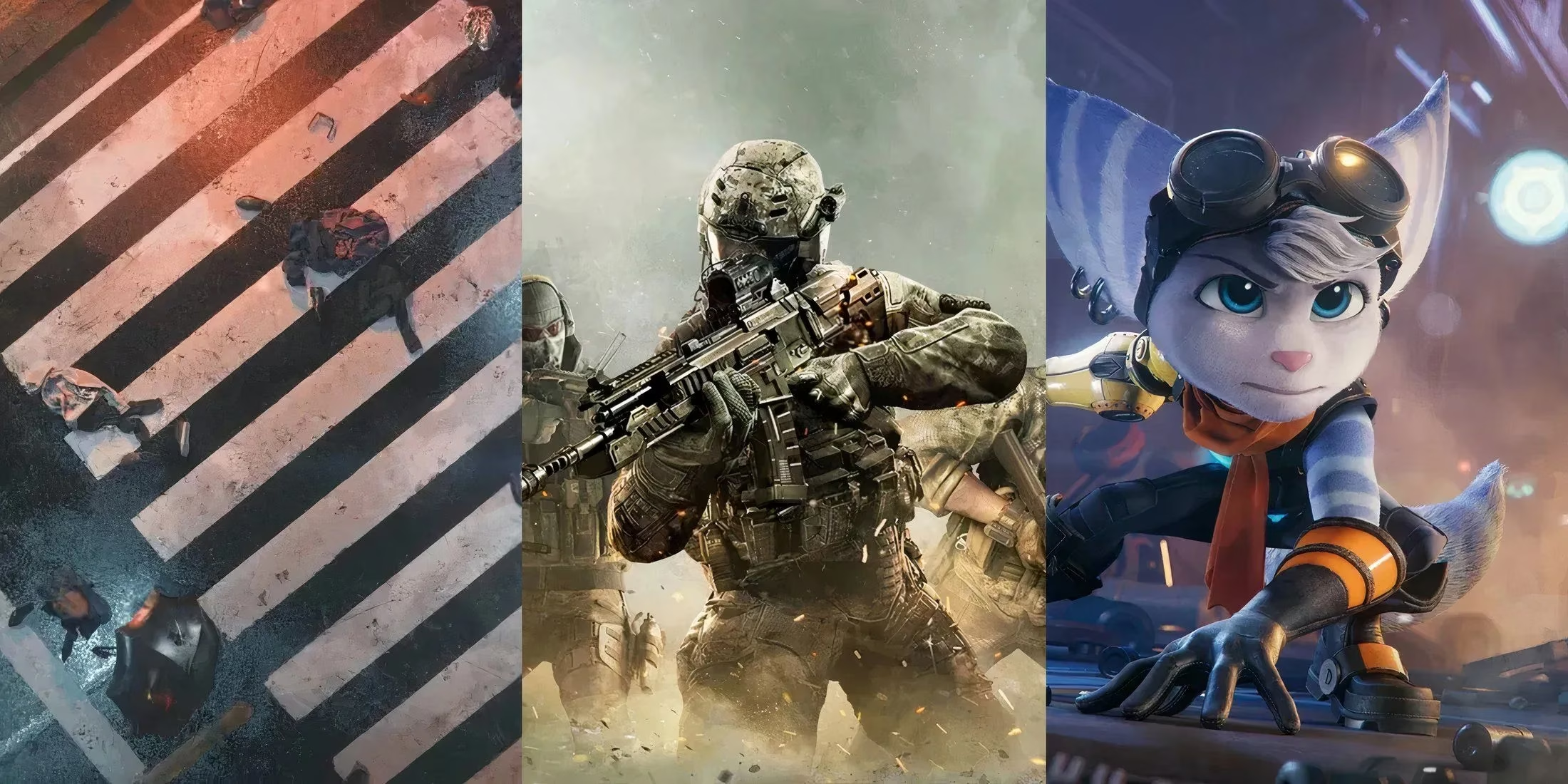
Let me break down some of the absolute best uses of haptics I've experienced lately. First up, Ratchet & Clank: Rift Apart. This game is the gold standard, no contest. The haptics aren't just added on; they're woven into the DNA of every action. Every weapon has its own unique personality you can feel. Firing the Enforcer? That's a satisfying, heavy thump. Using the Pixelizer? It's a chaotic, digital buzz. But it's the rifts that are insane – jumping through one feels like your controller is being pulled apart and stitched back together. It’s so integral that playing without it would feel like losing a sense. It provides tactical clues about incoming damage, letting you react instinctively. Pure genius.
Now, let's shift gears – literally. Gran Turismo 7. If you want to feel what it's like to drive a supercar, this is it. The haptic feedback here is a symphony of mechanical sensations.
-
Every gear shift has a precise, metallic clunk.
-
You can feel the ABS rumbling through the brake pedal as you lock up.
-
The moment your tires start to lose grip on a corner? It starts as a subtle vibration that builds into a frantic shudder.
The adaptive triggers are the real MVP, though. Pressing the brake trigger physically resists you, letting you feel the braking pressure. It’s a game-changer for precision driving.
For a completely different vibe, Tetris Effect: Connected is a masterclass in sensory synchronization. It's not just playing Tetris; it's a hypnotic, full-body experience. Every block that drops, every line clear, is timed perfectly with haptic pulses, visuals, and the soundtrack. A soft tap for a gentle drop, a resonant thrum for a Tetris. It turns a simple puzzle game into something almost meditative. It proves haptics aren't just for action – they're for emotion and rhythm.
On the PS5, Astro's Playroom is the free tech demo that's still one of the best showcases. It's a love letter to the DualSense. You can feel:
-
Individual raindrops as light taps.
-
The grinding of metal gears in a spring suit.
-
The slippery skid on ice.
It’s playful, inventive, and teaches you how to listen to your controller. It turned learning the controls into the main event.
For a darker, more intense experience, Returnal uses haptics to amplify its relentless tension. Every step on the alien soil has a subtle texture. Every enemy hit sends a jarring jolt. But the adaptive triggers are used brilliantly for its weapons. A half-press activates the alt-fire aiming mode, a full press unleashes it. Each gun, from the pistol to the Electropylon Driver, has a distinct trigger resistance and feedback pattern. The haptics literally grow more intense as the on-screen chaos escalates, pulling you deeper into Selene's desperate loop.
Let's not forget the magic. Ghostwire: Tokyo built its entire combat system around haptics. Casting spells isn't just pressing a button. You feel the energy channeling as you draw ethereal seals with the triggers. Each element – wind, water, fire – has its own signature vibration. There's a tangible synergy between your hand movements, the visual cues, and the controller's response. It makes you feel like a real spectral sorcerer.
On the Nintendo Switch, Nintendo Switch Sports carries the torch from Wii Sports but with much finer haptic precision. It’s subtle but incredibly effective.
| Sport | Haptic Feedback Feel |
|---|---|
| Bowling | The satisfying thump-thump-thump of a strike. |
| Tennis | The crisp vibration of a perfect swing connecting. |
| Fencing | The sharp clash and pushback of blades meeting. |
It’s feedback that’s useful without being overwhelming, perfect for the handheld experience.
And hey, mobile gaming gets in on the action too! Call of Duty: Mobile is a standout. On a decent device, the haptics are seriously impressive. You feel every gunshot, every reload, and every hit you take. A melee attack from behind? That’s a full-force rumble that'll make you jump. On a touchscreen, this tactile feedback is crucial—it gives you physical confirmation of your actions, improving control and immersion on the go.
So, what's the takeaway in 2026? Haptic feedback has moved from a neat trick to a fundamental pillar of game design. The best games use it not as a layer of polish, but as a core communication tool. It tells stories, provides critical gameplay information, and creates emotional connections that visuals and sound alone can't achieve. We're feeling our games now, and I, for one, can't wait to see what we get to feel next. 🤯🎮